Project name: Merchant Solutions
Clients: Standard Bank and Diners Club
(DVT clients)
My role: Product Design Lead
Date: 17 September 2019 - 31 October 2022
Executive summary:
From September 2019 to October 2022, while working through DVT, I was embedded in Standard Bank’s Card Engineering portfolio as Product Design Lead and held Salesforce Ranger status. I supported the Merchant Solutions Acquiring and Diners Club SA teams across point-of-sale products, digital wallets and online payment solutions. My core contribution was product and service design thinking: understanding the problem, mapping the wider service, shaping concepts and aligning teams. I produced UI when needed, mainly to make ideas tangible and communicate direction.
Problem statement
Standard Bank needed to modernise its merchant payment solutions to improve the user experience, increase transaction efficiency and respond to evolving customer expectations in a competitive market.
On my first day with the team, our BA—one of the best I had worked with—asked how long it would take to make a project “look pretty”. It was the first time the team had worked with a dedicated designer, so part of my role was to establish design as a problem-solving discipline rather than a visual finishing step.
To introduce both myself and a more structured way of working, I ran Tom Wujec’s “How to Make Toast” exercise.
The exercise gave the team a practical view of how differently people could understand the same problem, why assumptions needed to be made visible, and how collaborative modelling could improve shared understanding. It also helped us build rapport early in what became a four-year journey together.
Standard Bank & Diners Club
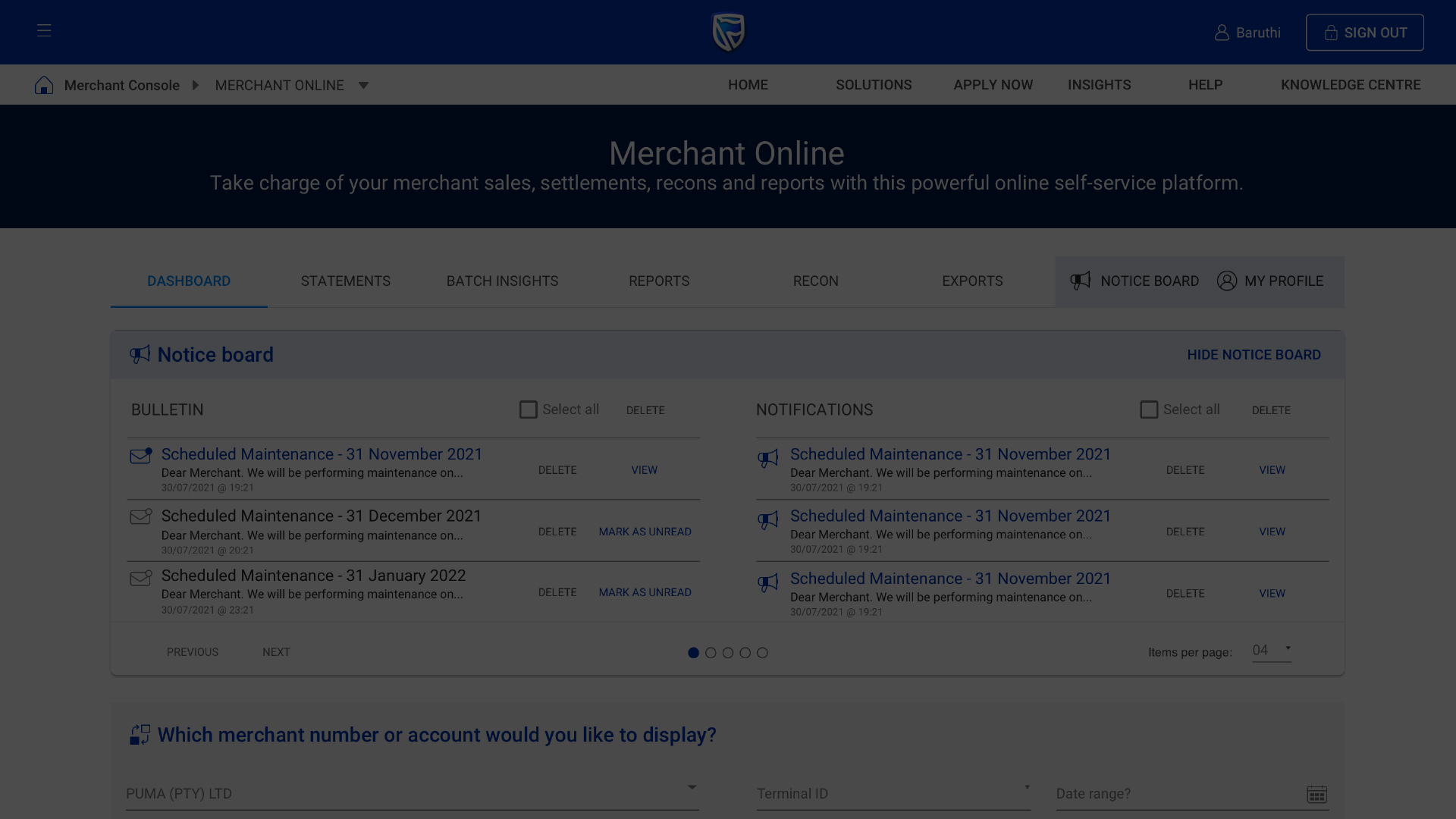
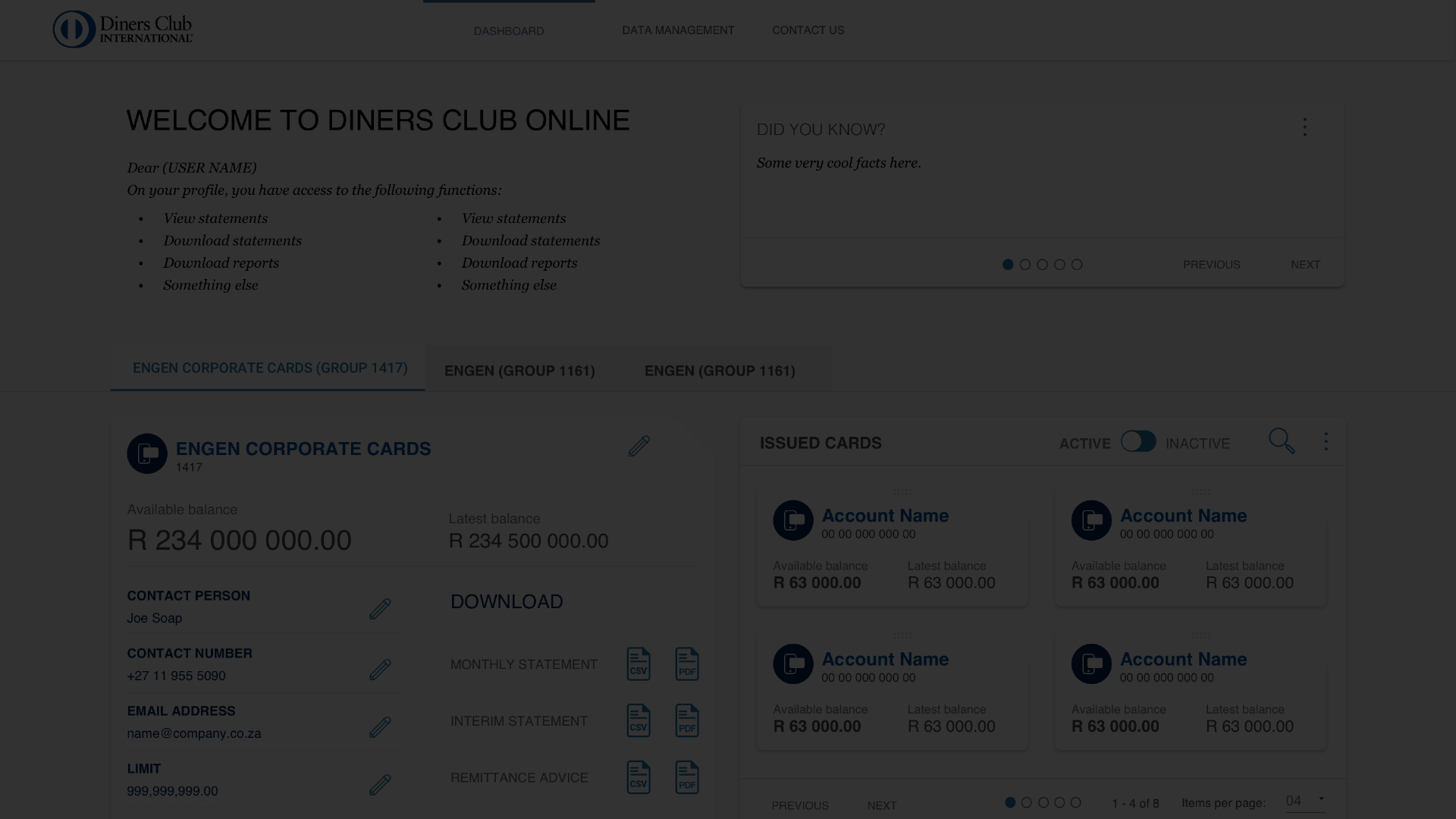
I worked as Product Design Lead across two teams and multiple projects. The centre of the role was problem framing, research, service design, conceptual modelling and cross-functional alignment; UI design supported that work by visualising and communicating the intended solution.
Approach “Knowledge sharing and exploration”
I joined from a telecommunications background with no previous banking experience, so I first had to understand the domain, operating environment and constraints. In return, I introduced Human-Centred Design, Design Thinking and design sprints. I later introduced Service Design Blueprints, which helped us move beyond individual screens and map how merchant services, processes, teams and technology connected.
Design Sprints, a "Way of Work"
Design sprints gave the team a practical way to reduce uncertainty, explore options and gather stakeholder feedback within four days. We used the approach to shape MVP1 for Diners Club’s first South African mobile app, built in Flutter, and later applied the same way of working to the Corporate Card and Merchant Console platforms.
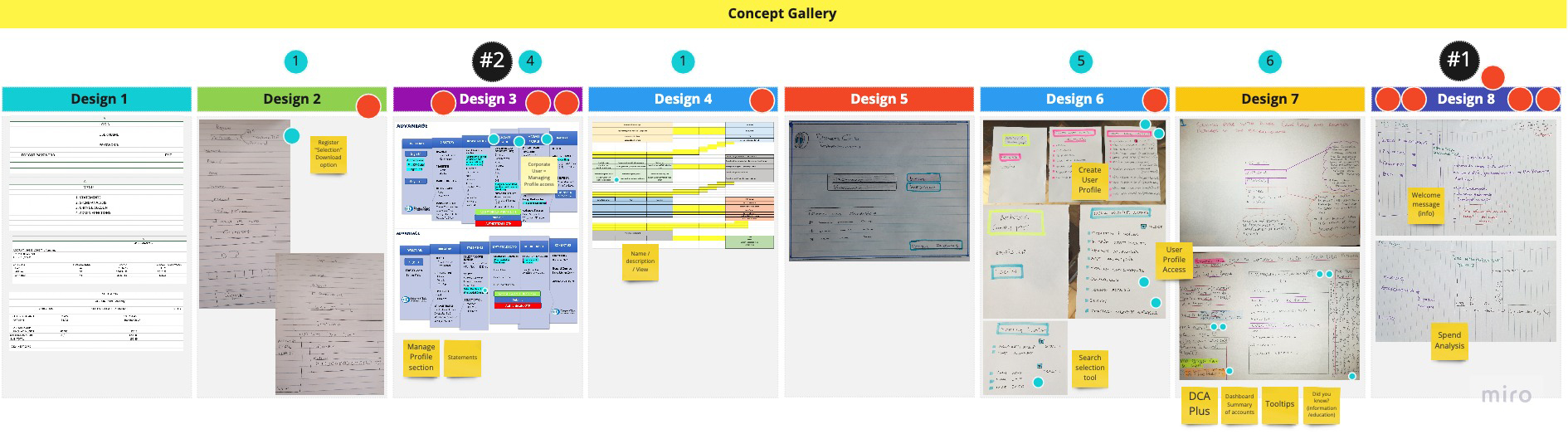
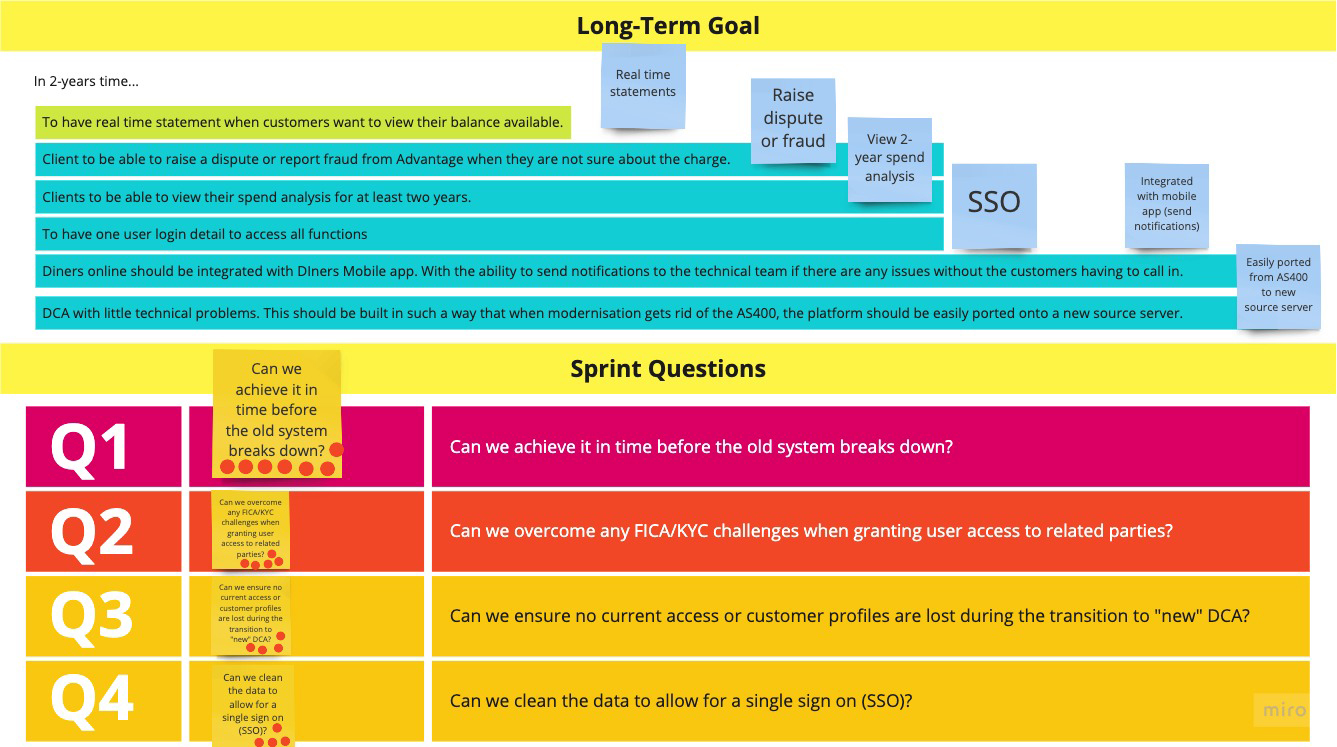
April 2020, Covid restrictions. “Design Sprints, online”
Covid restrictions arrived just as the team had started to find its rhythm, and we moved to remote work indefinitely. Because much of our design material was already digital, I adapted the design sprints to Miro. I ran two 90-minute sessions a day over four days, using the time between sessions to prepare the next activities and set up digital voting on the previous work.
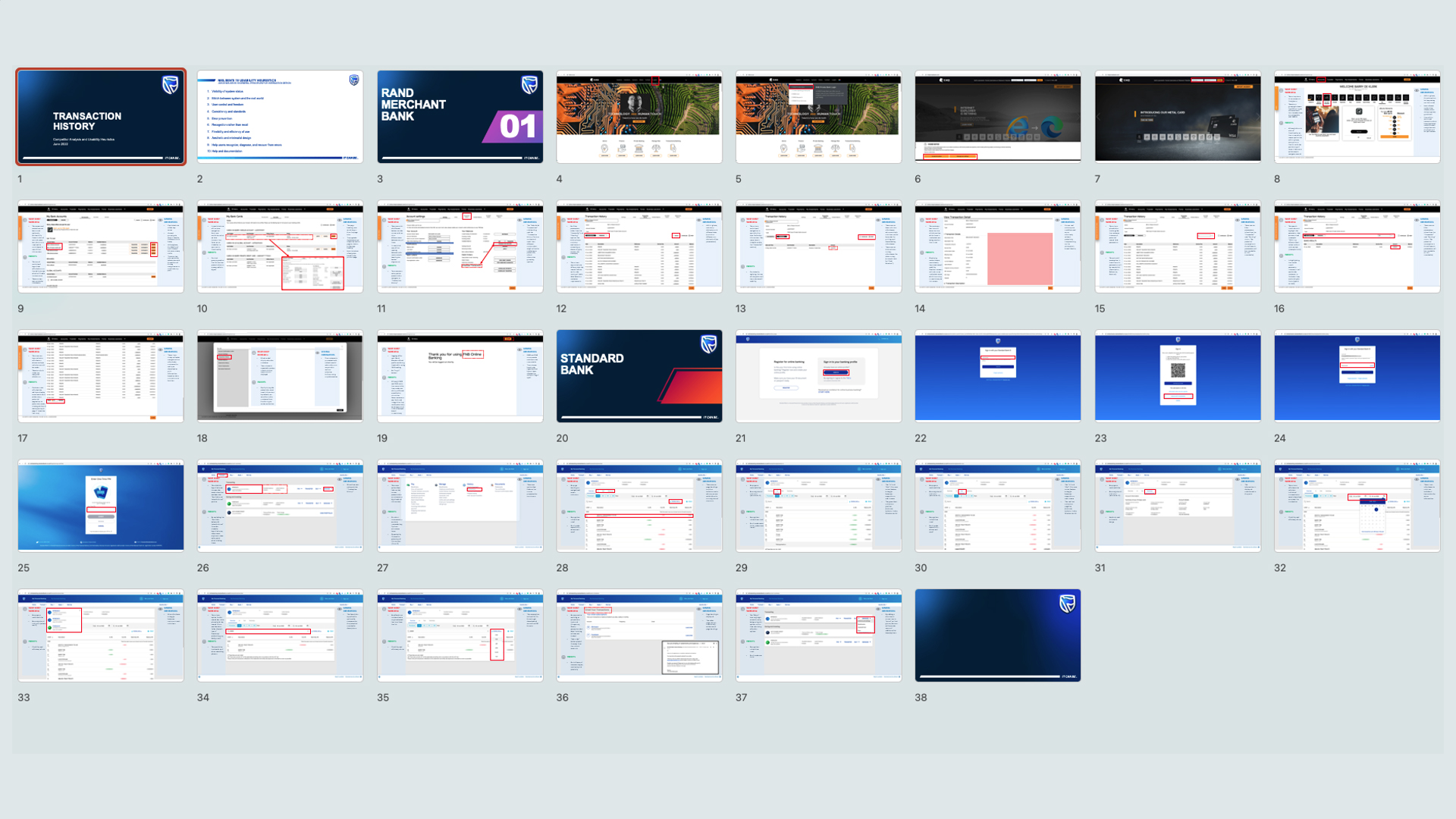
Heuristics
I analysed the existing experience to identify usability issues and opportunities.
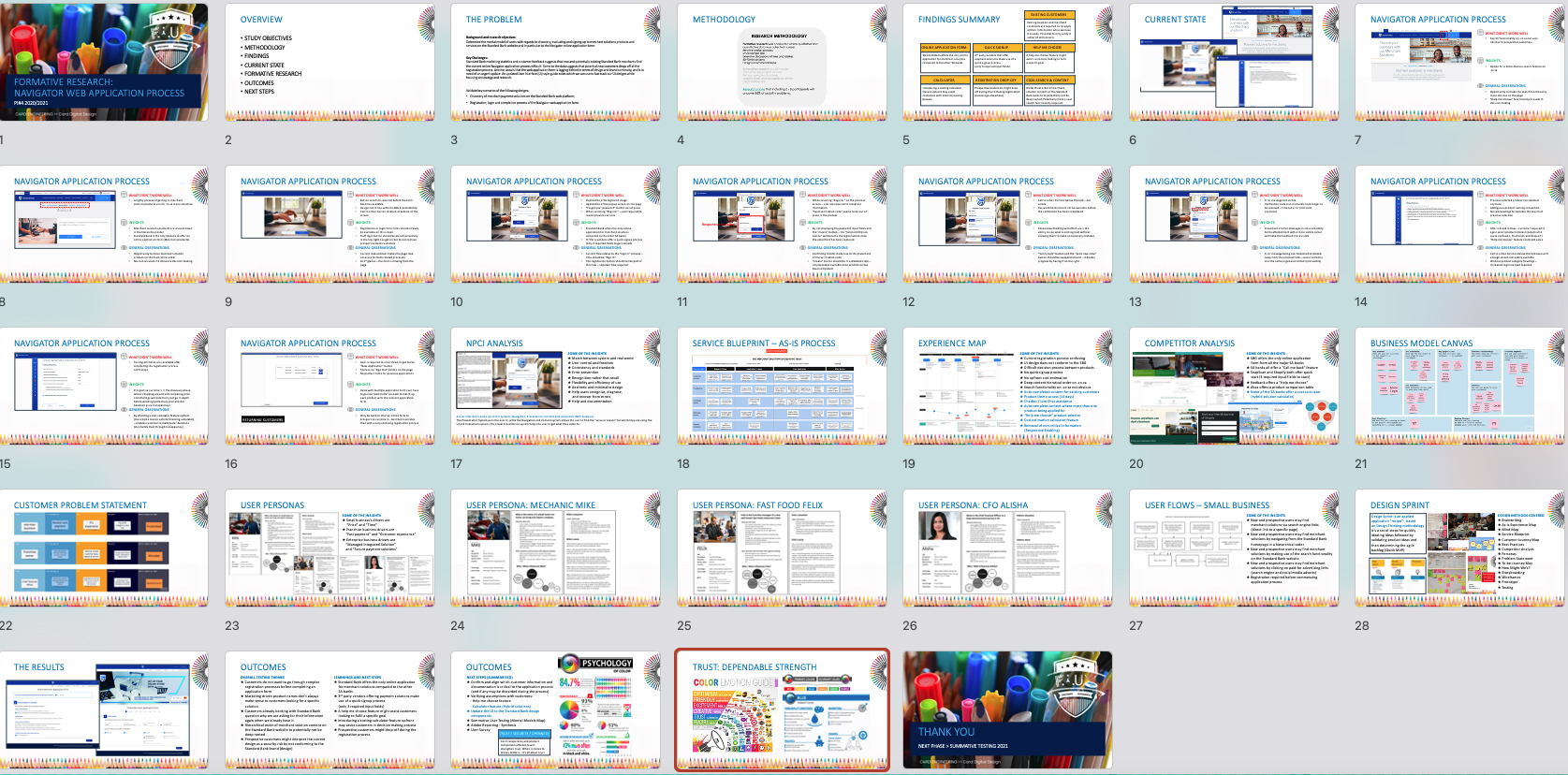
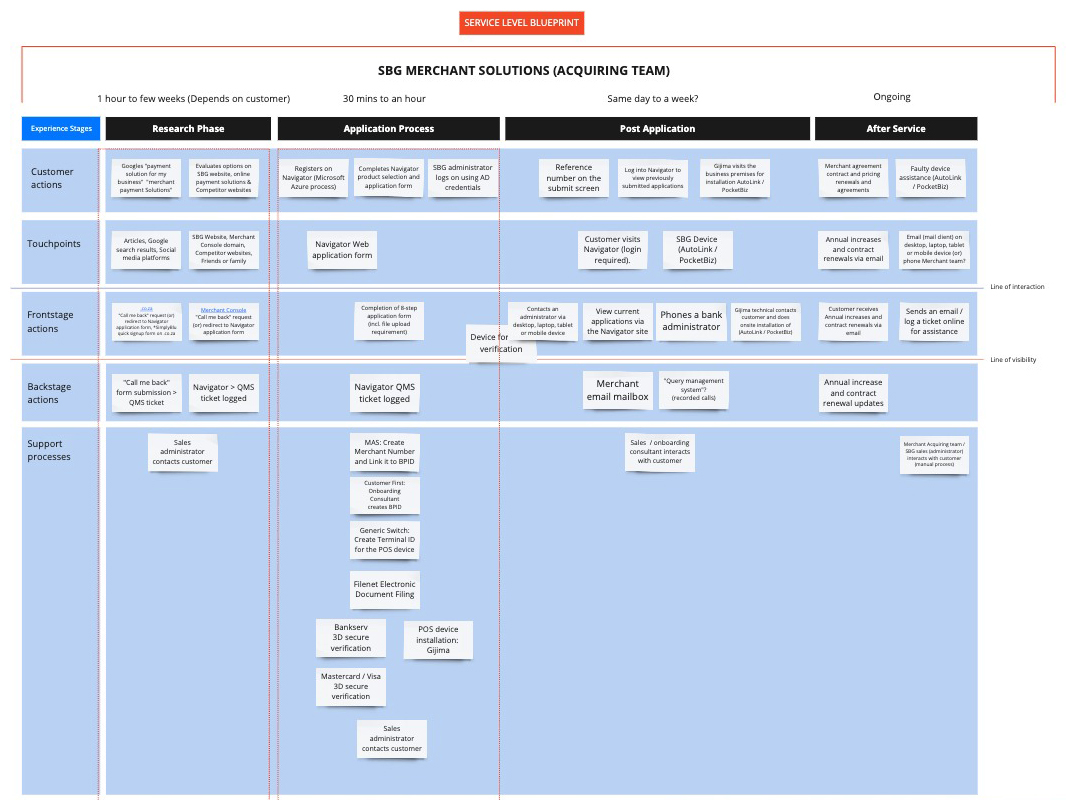
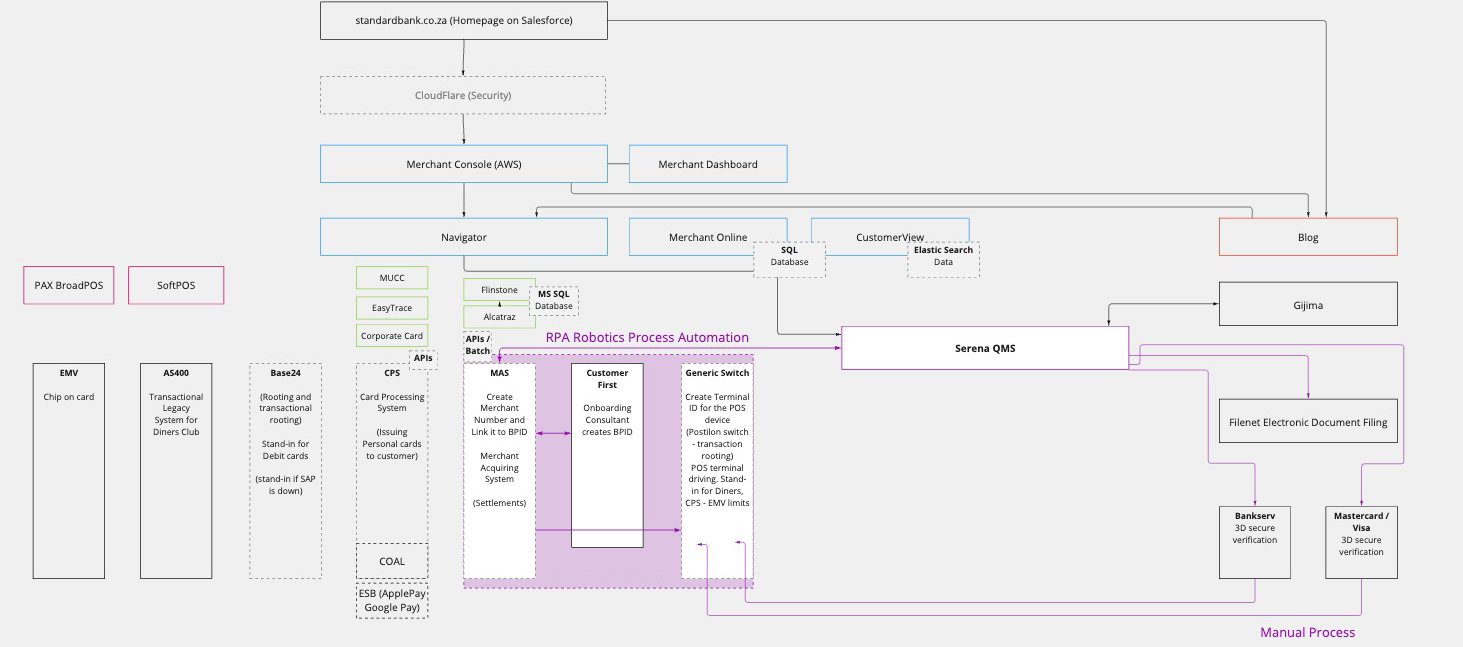
Service Design Blueprint Opportunities emerged
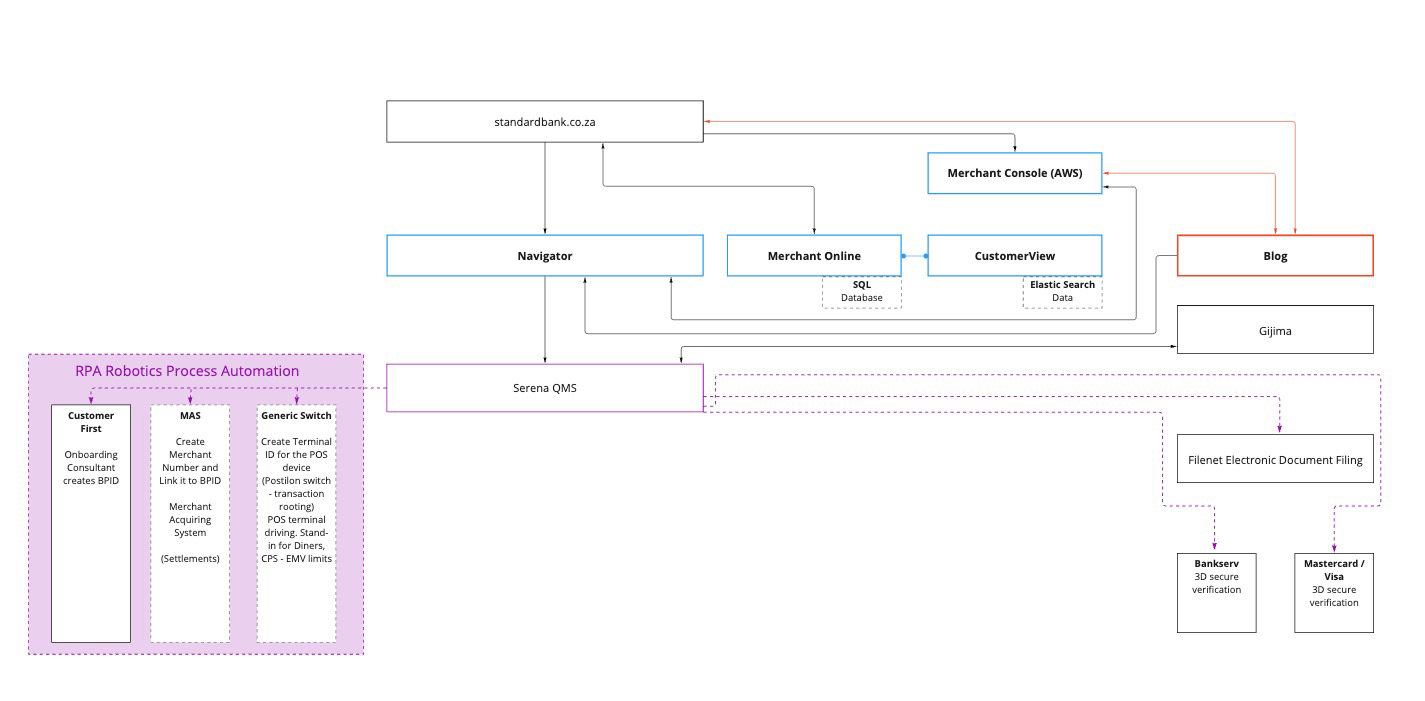
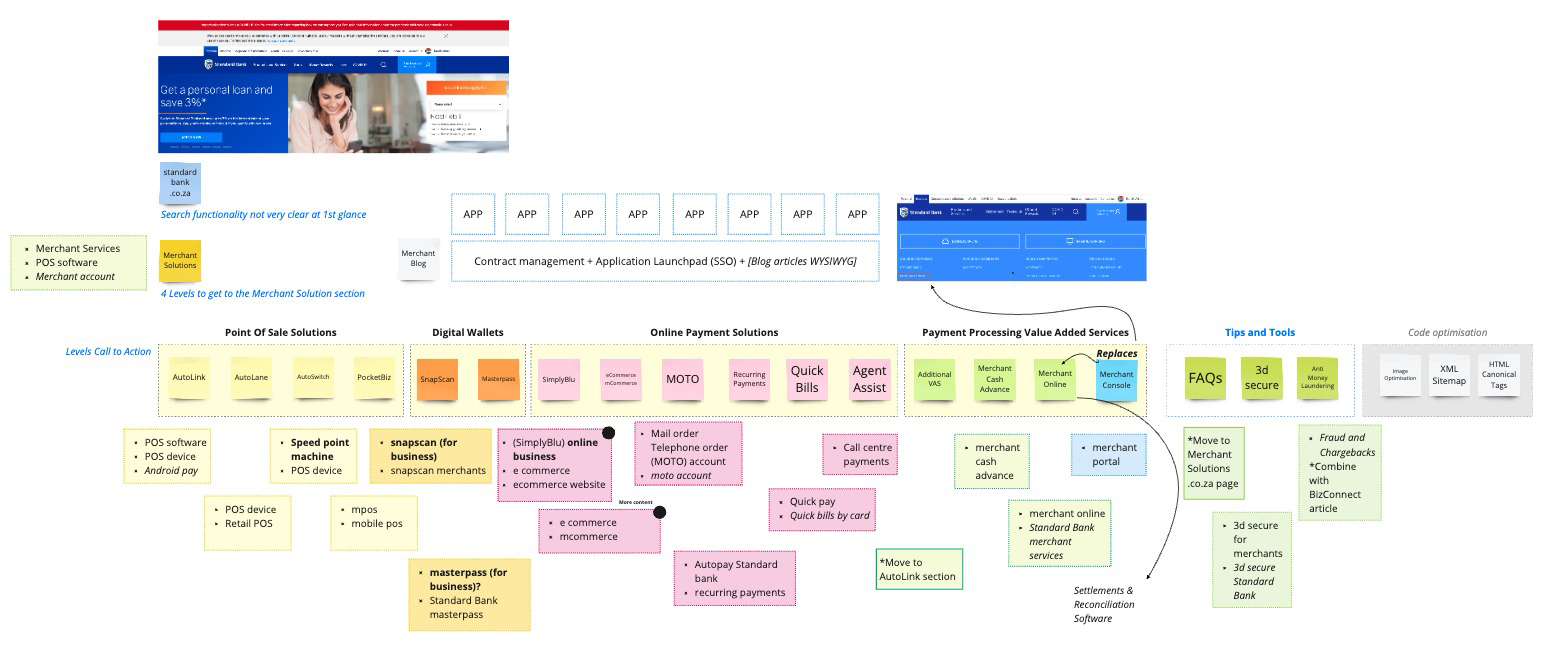
Service Design Blueprints became an important way of making the wider operating system visible. We mapped frontstage and backstage processes, backend operations, support roles and service dependencies. Once those relationships were visible, pain points and opportunities surfaced more clearly, including areas for automation, digitisation and process simplification.
Research roadmap “What did we need to learn?”
With many unknowns still unresolved, I created a research roadmap to guide discovery and decision-making. We needed to understand who we were solving for, which products each audience used, what they were trying to achieve, what influenced their decisions, how business value connected to the roadmap and where the team should focus first. Those questions shaped the research that followed.
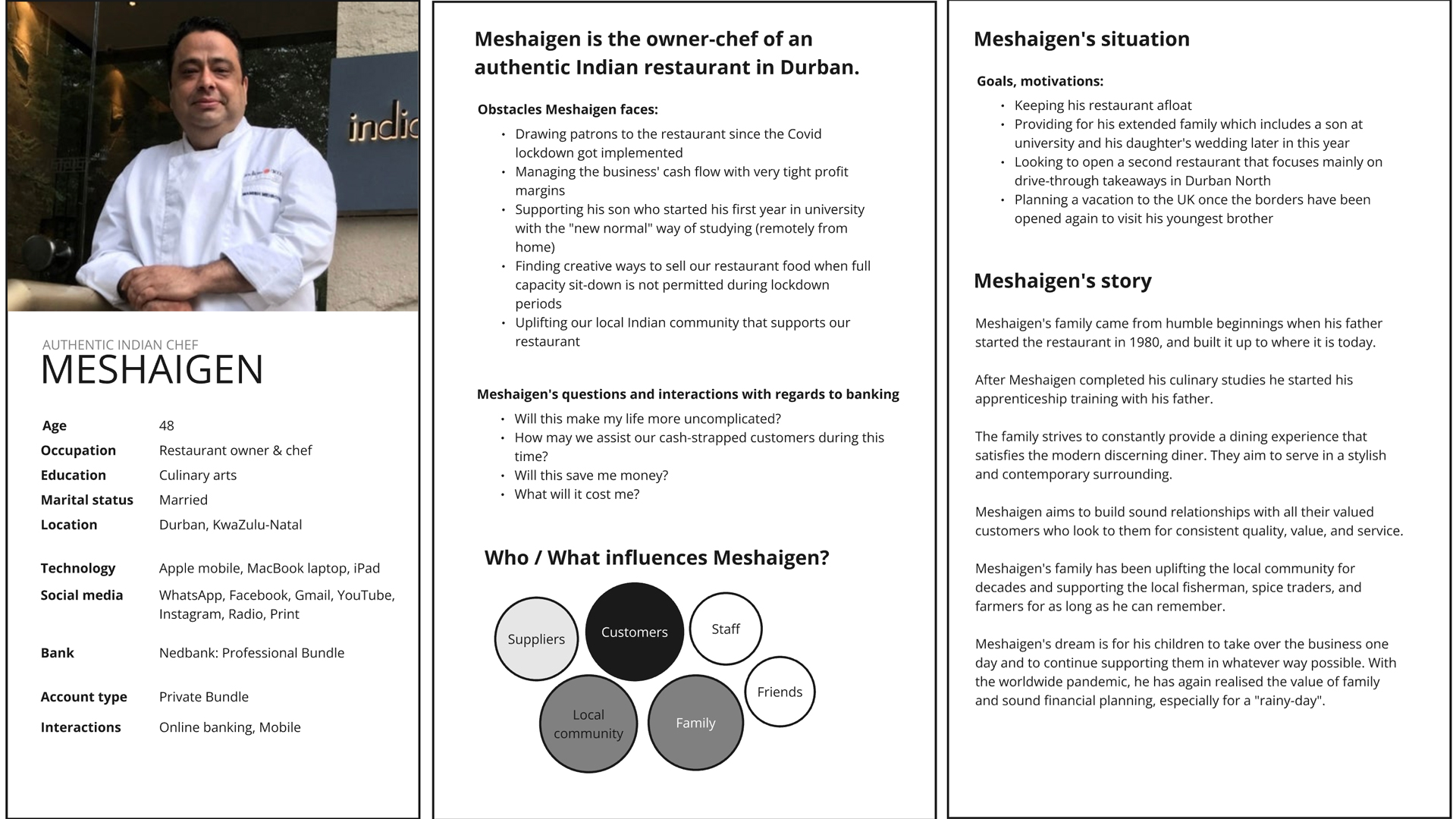
Who? "Our proto-personas"
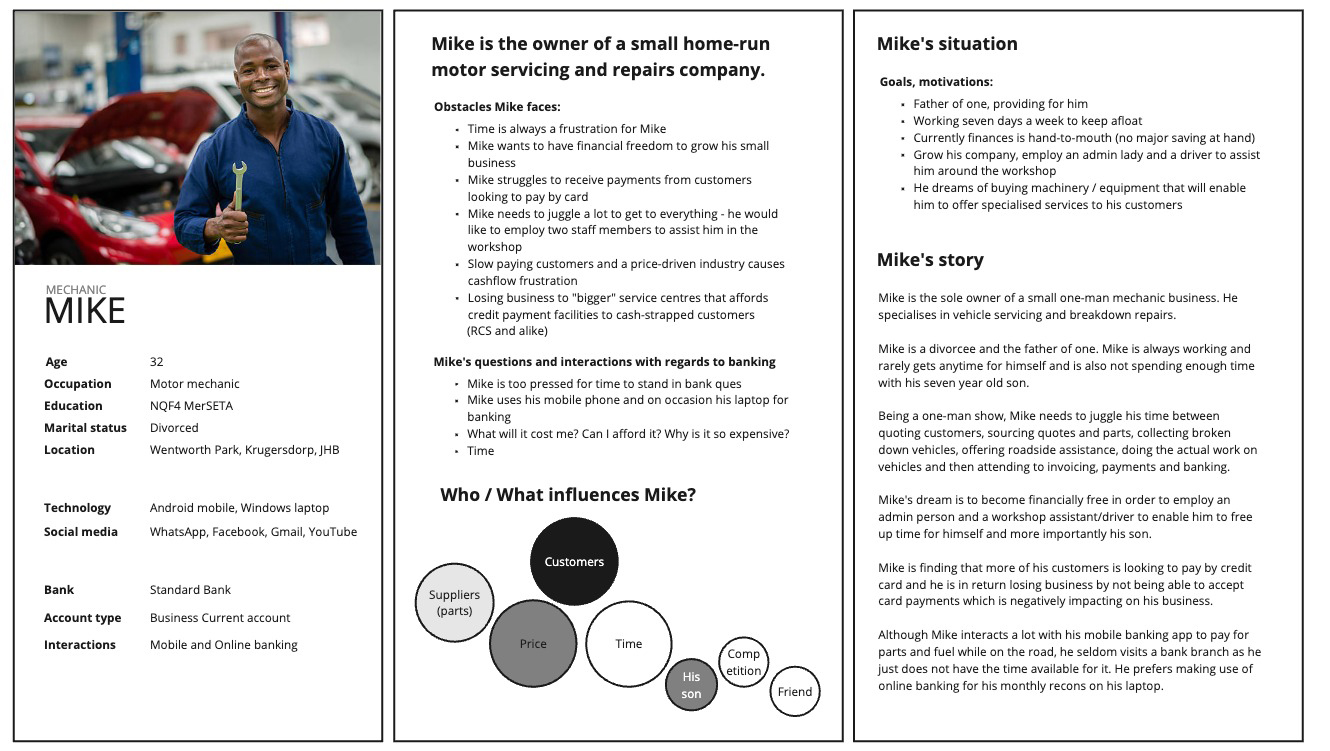
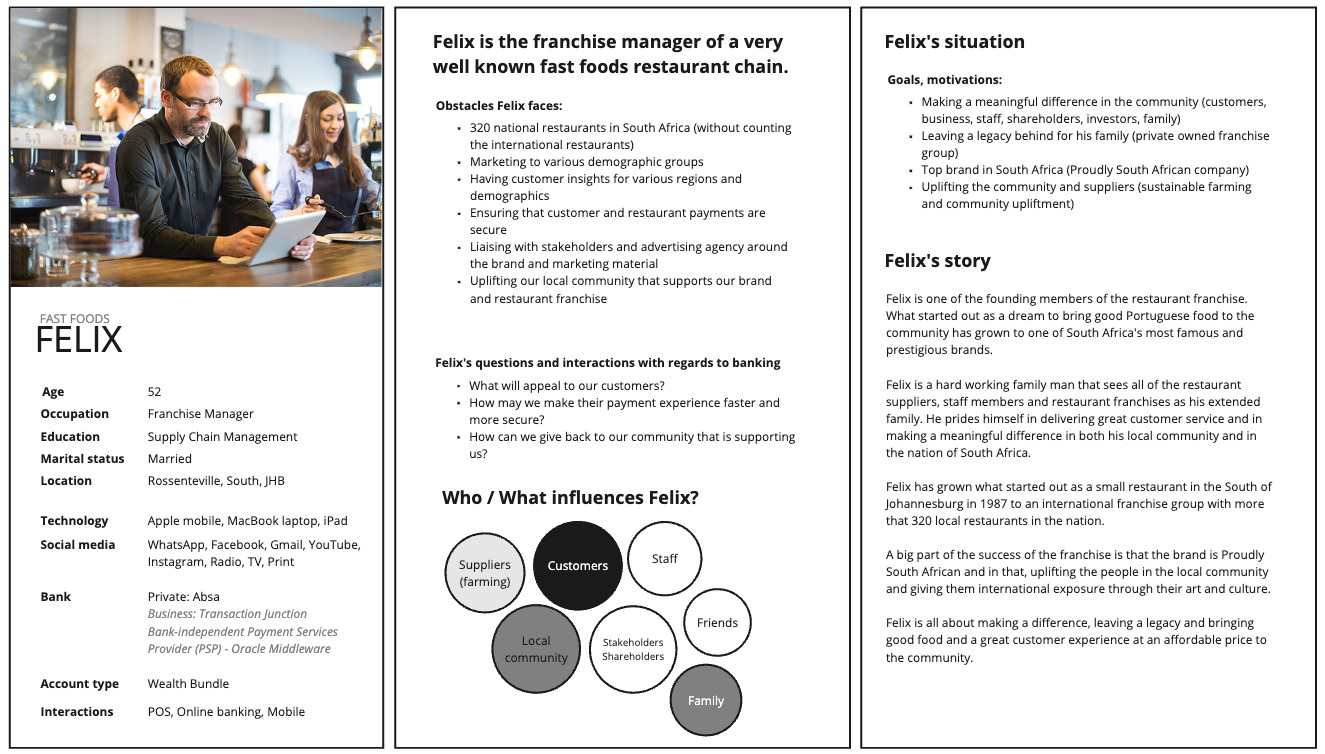
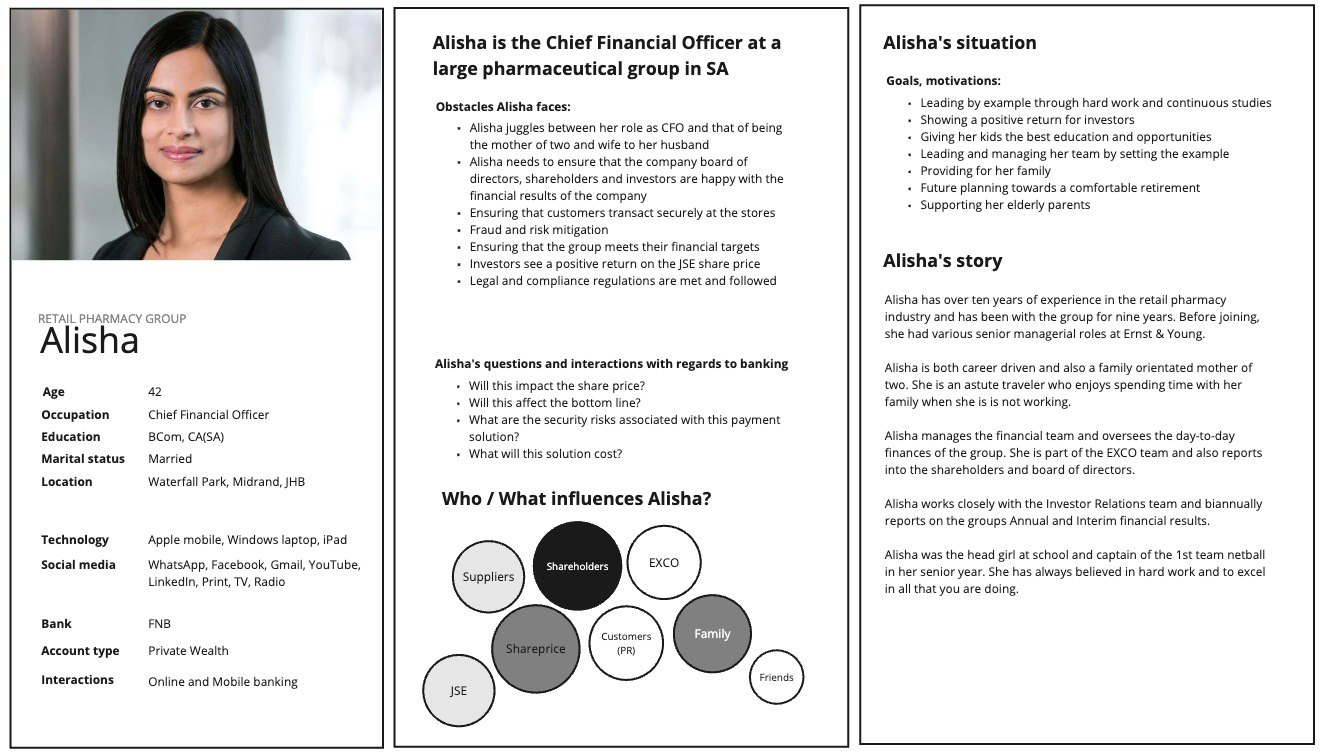
While working remotely, we gathered insights from the Product Owner and team members who worked with the merchant database. We used the quantitative data to form proto-persona hypotheses and then validated key assumptions with users.



The Business Model Canvas
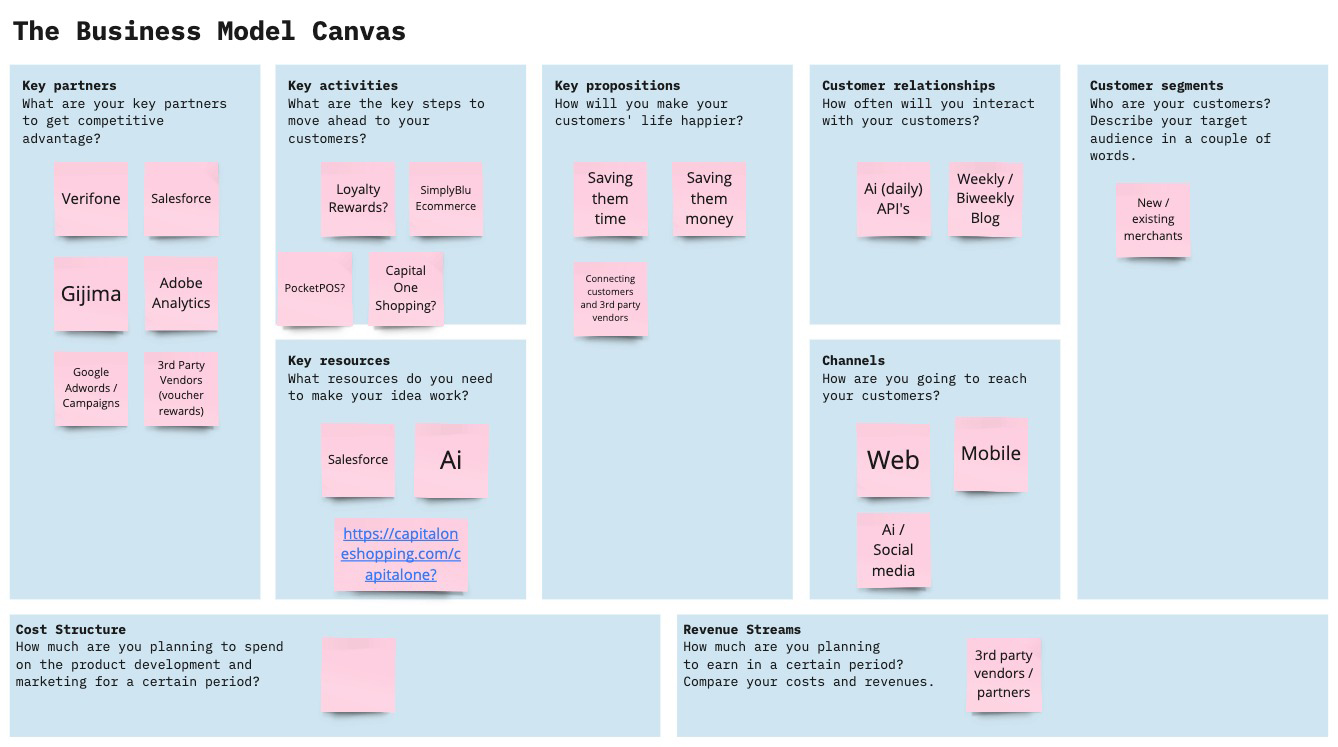
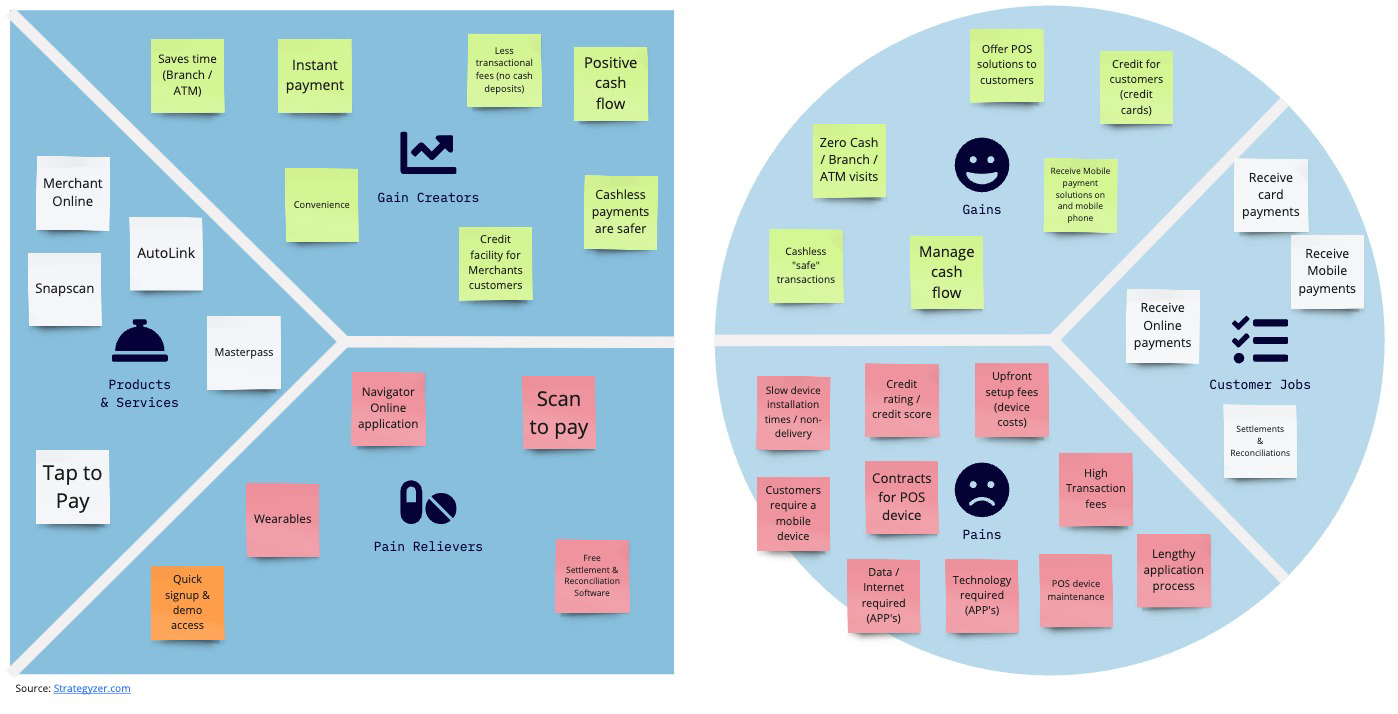
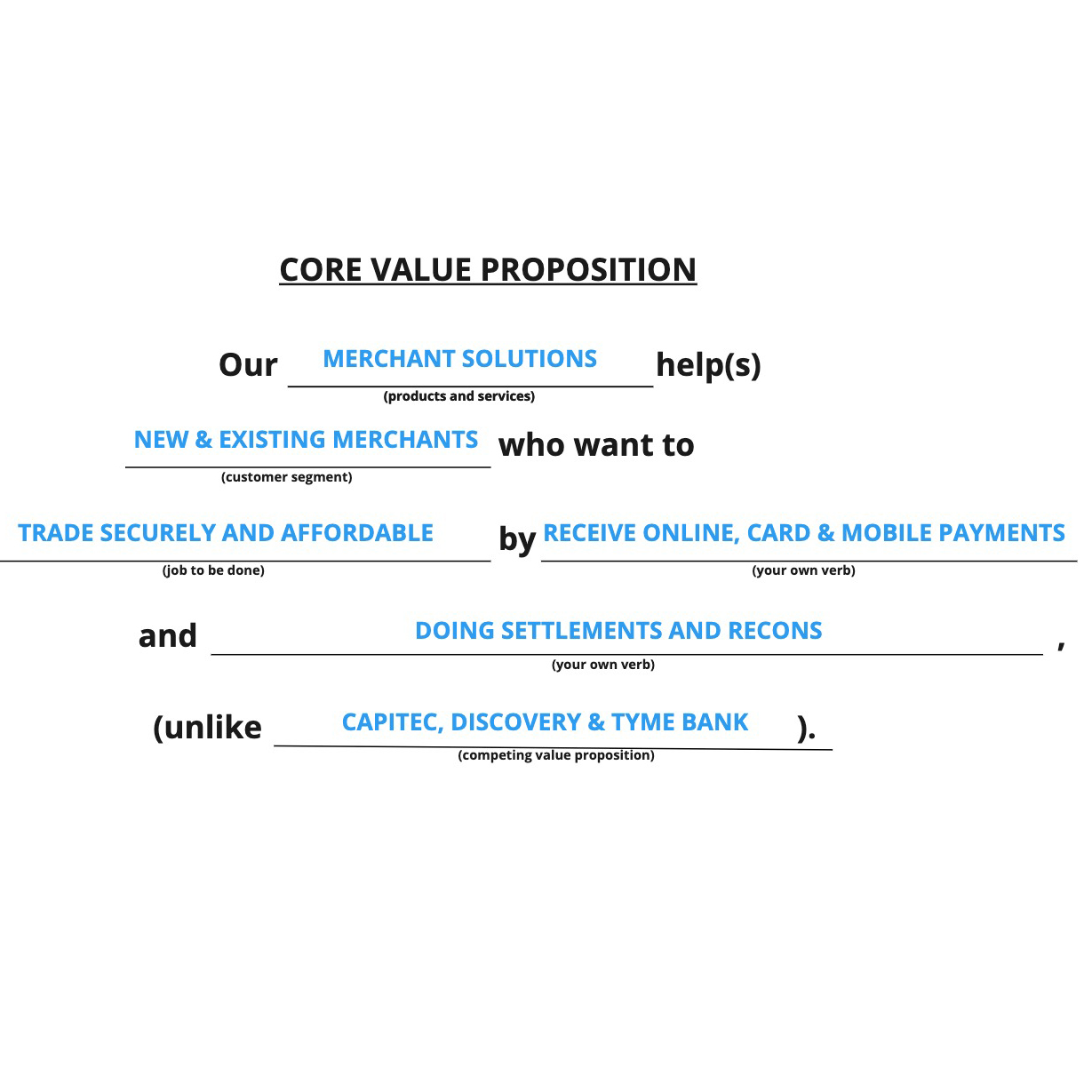
During discovery, the team used the Business Model Canvas to explore our product providers, product offering and business objectives. It helped structure our exploratory research as we mapped customer gains and pains, products and services, and potential gain creators.
Lean UX Canvas
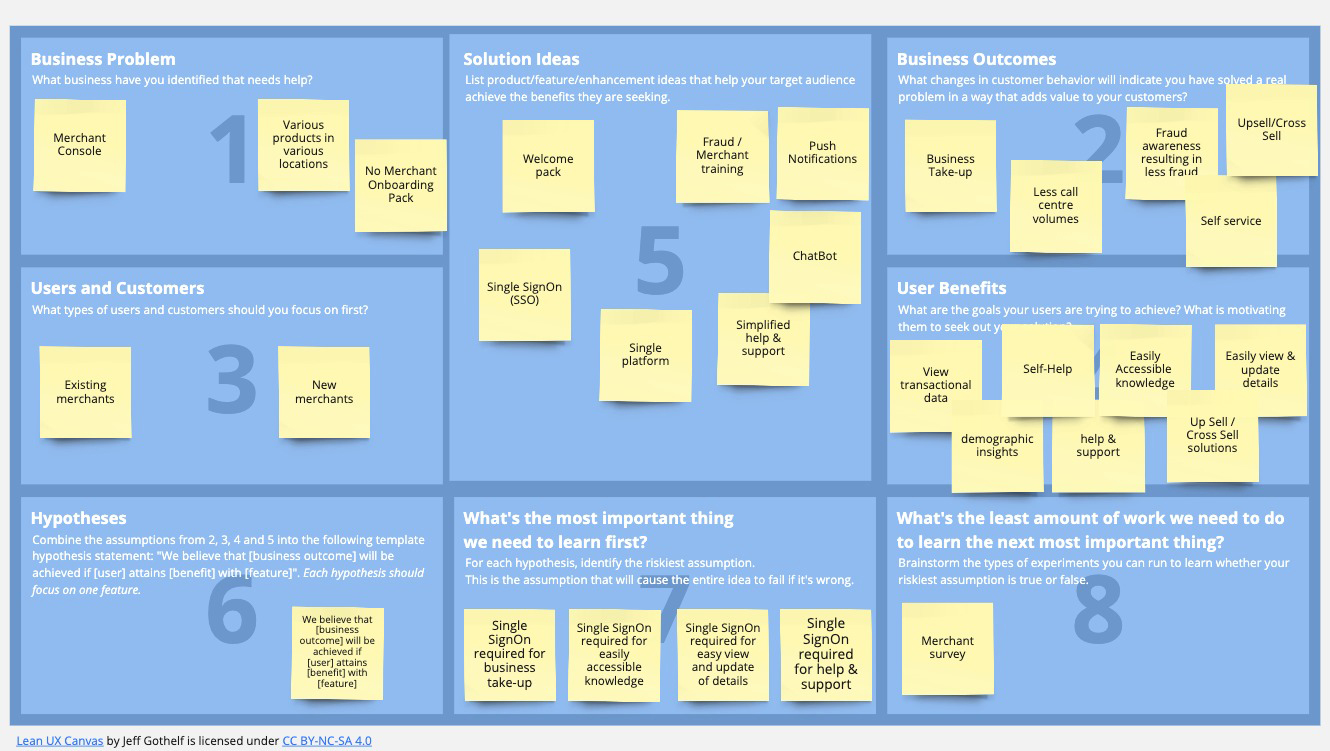
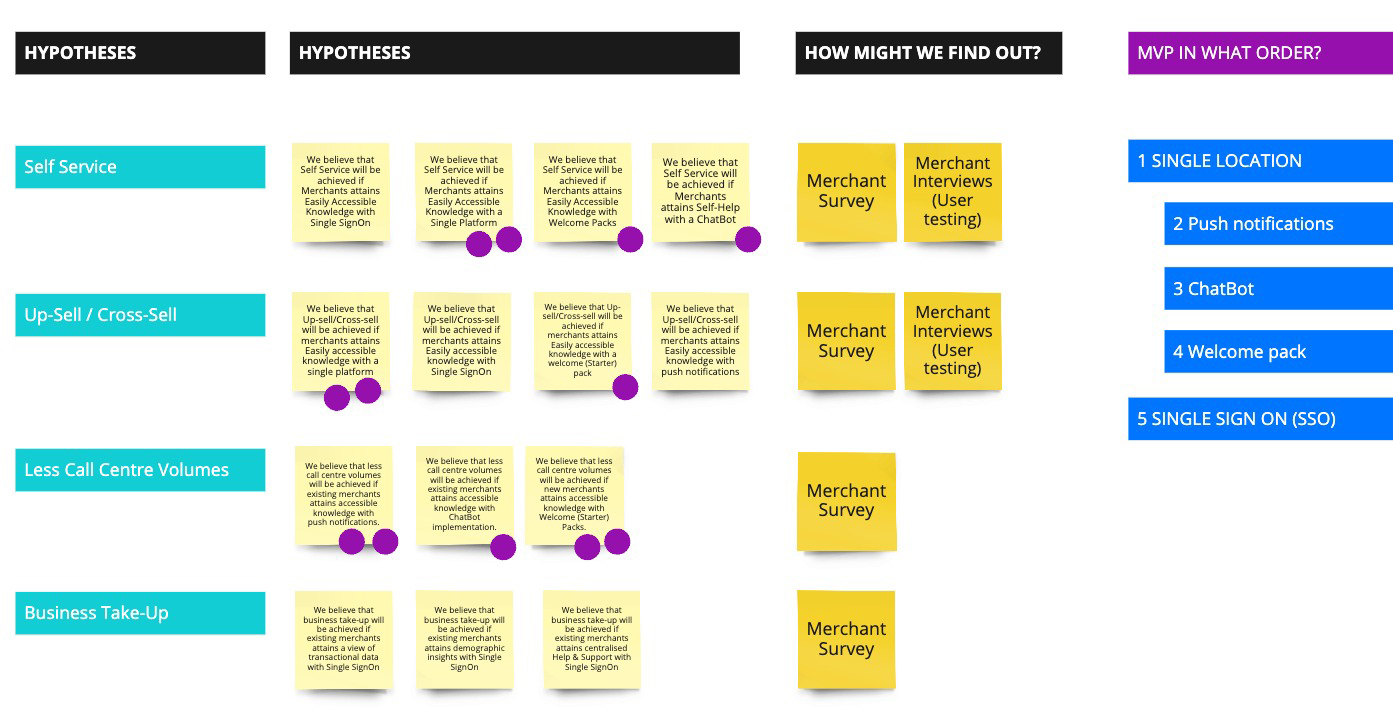
Our Product Owner initially believed that Single Sign-On (SSO) would create the most value for merchant customers and increase uptake of the broader service offering. We used the Lean UX Canvas to bring together the desired business outcomes, strategic objectives, assumptions and available evidence. The exercise challenged the original premise and shifted the team towards a broader one-stop merchant platform rather than implementing SSO across fragmented applications.
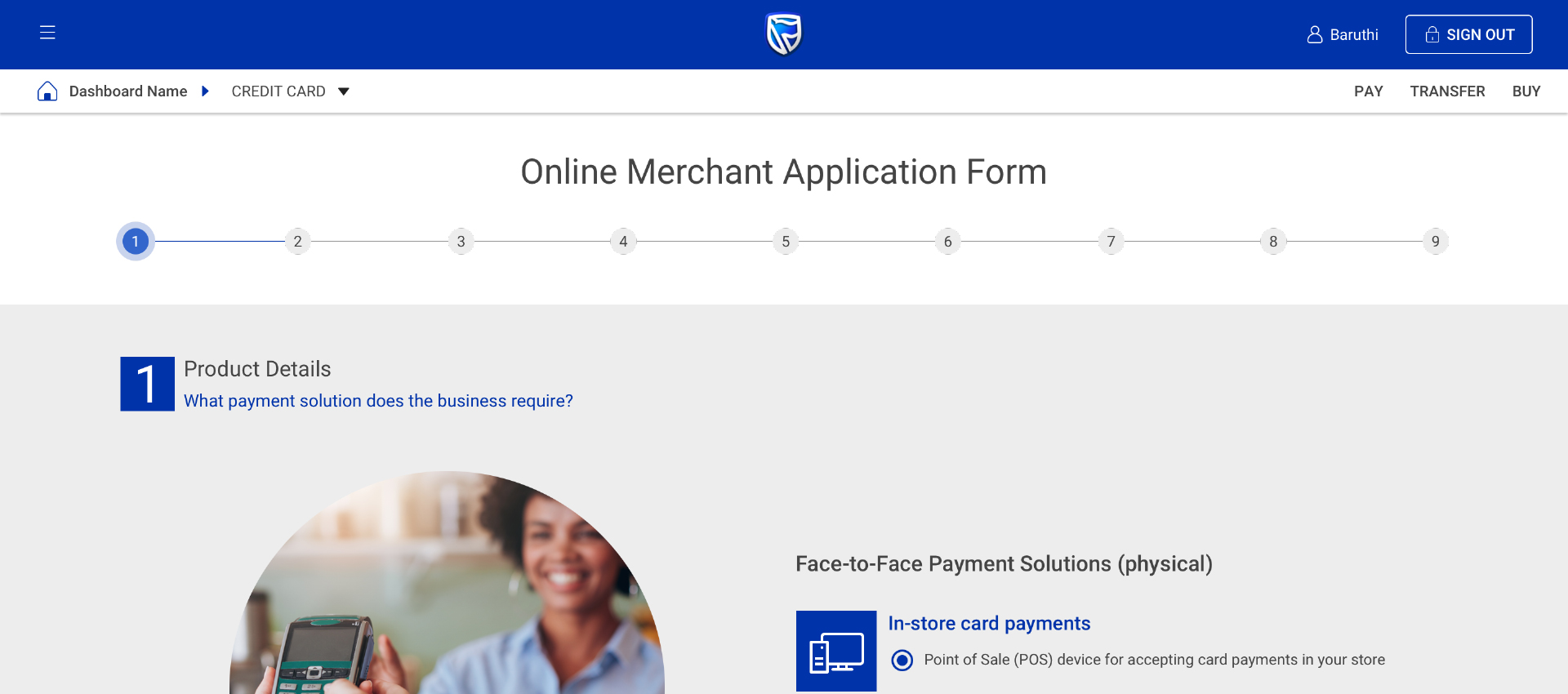
User Interface Design — visualising the solution
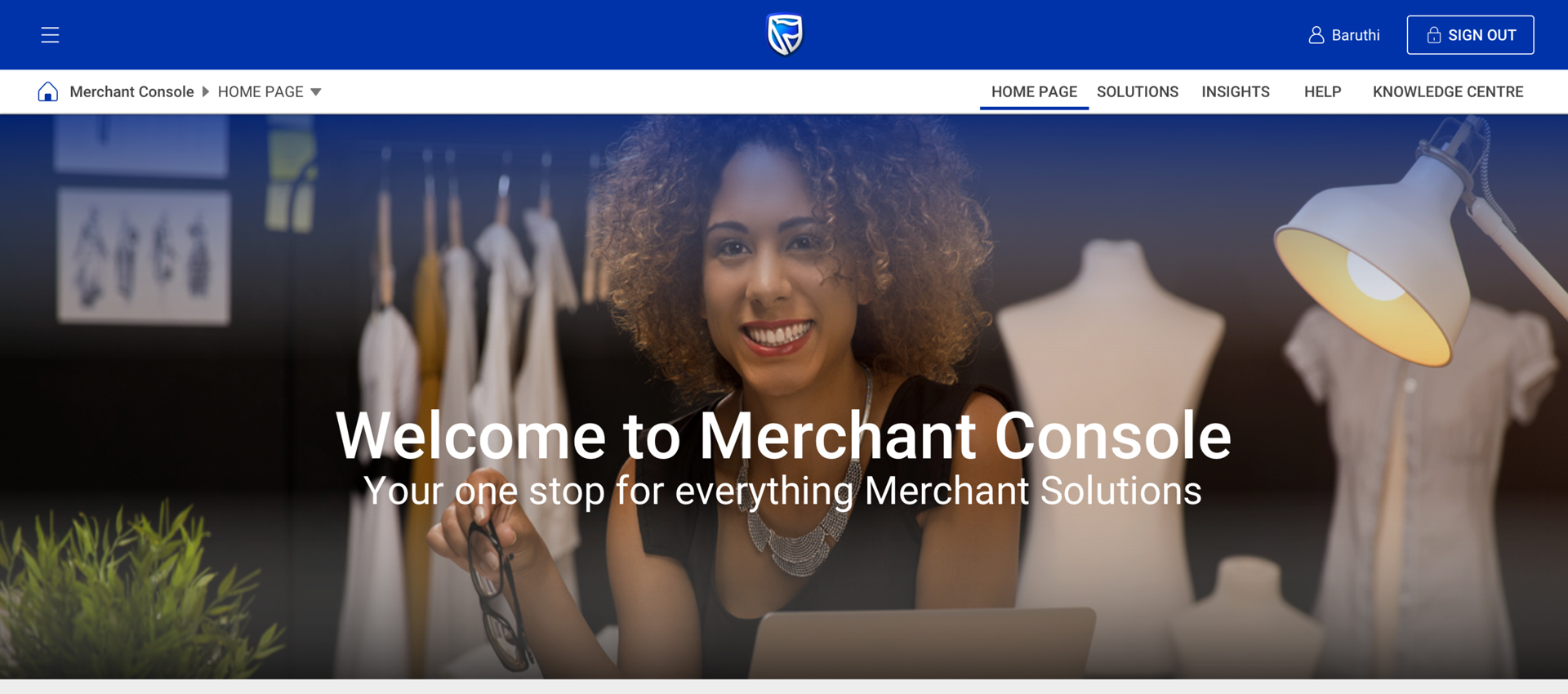
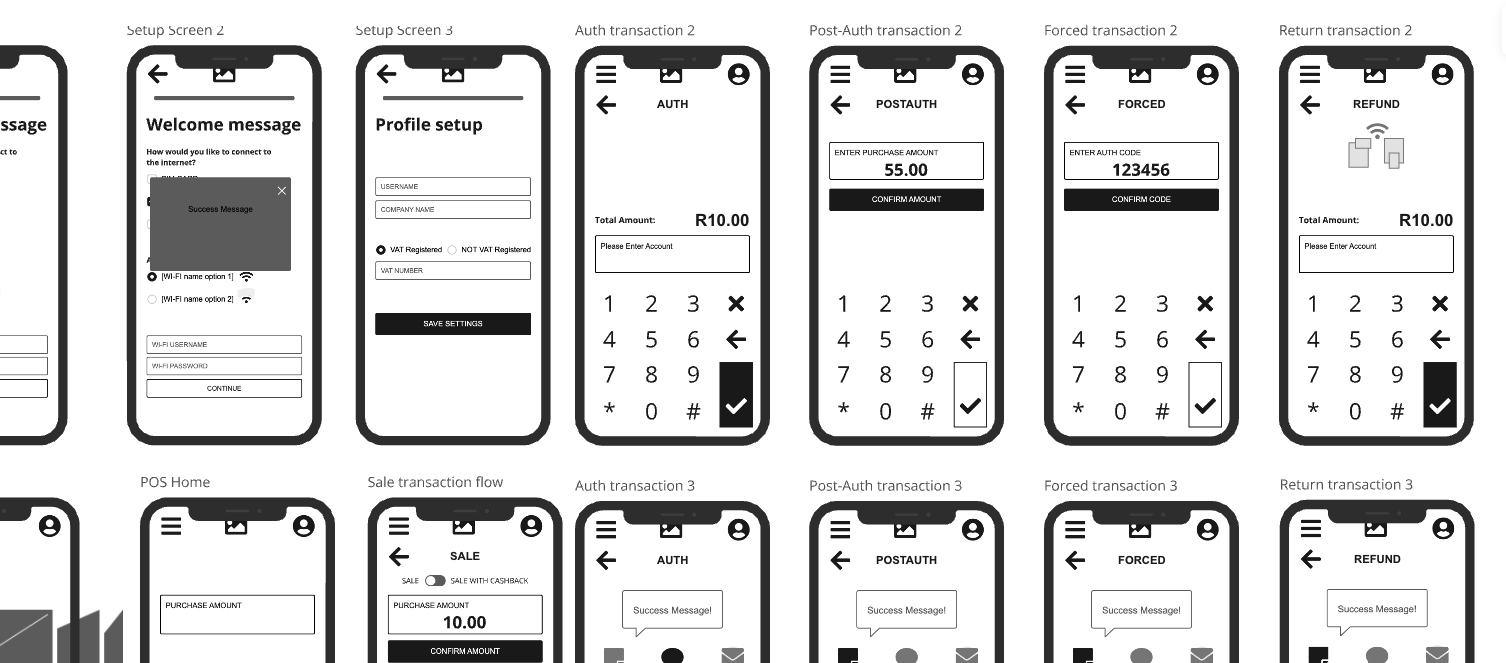
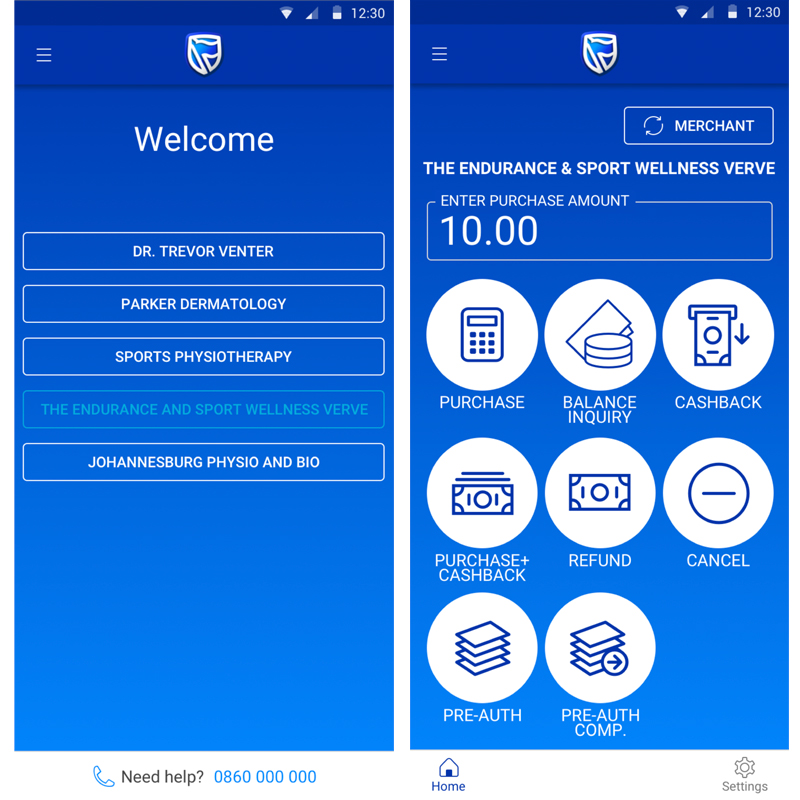
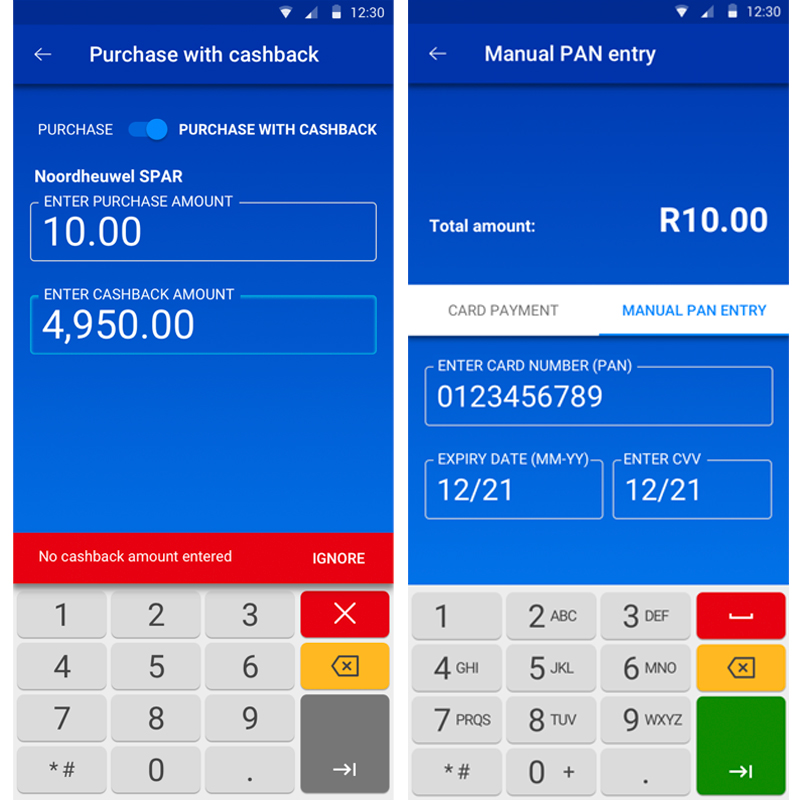
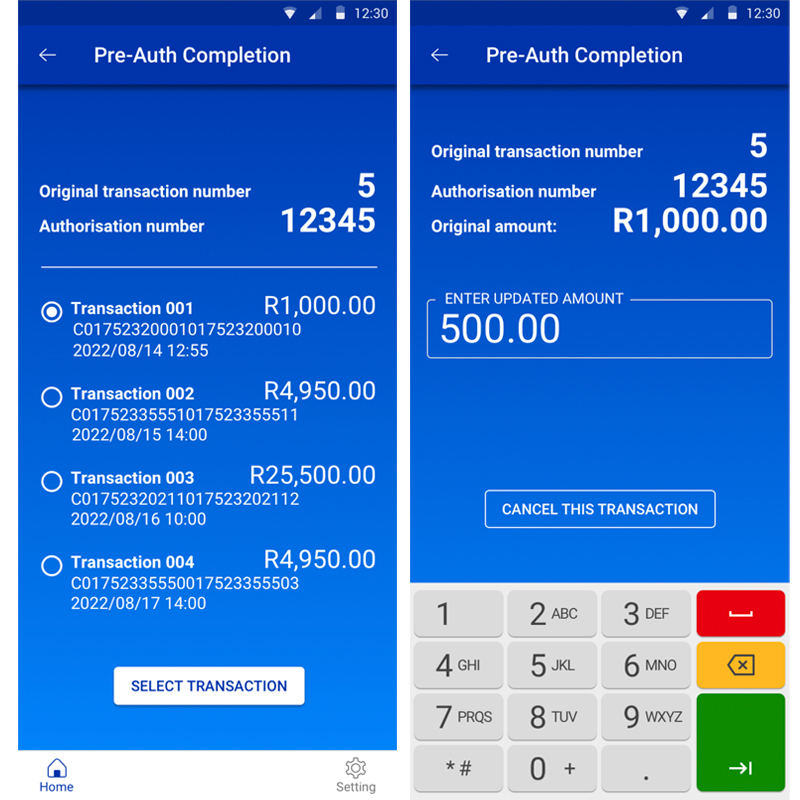
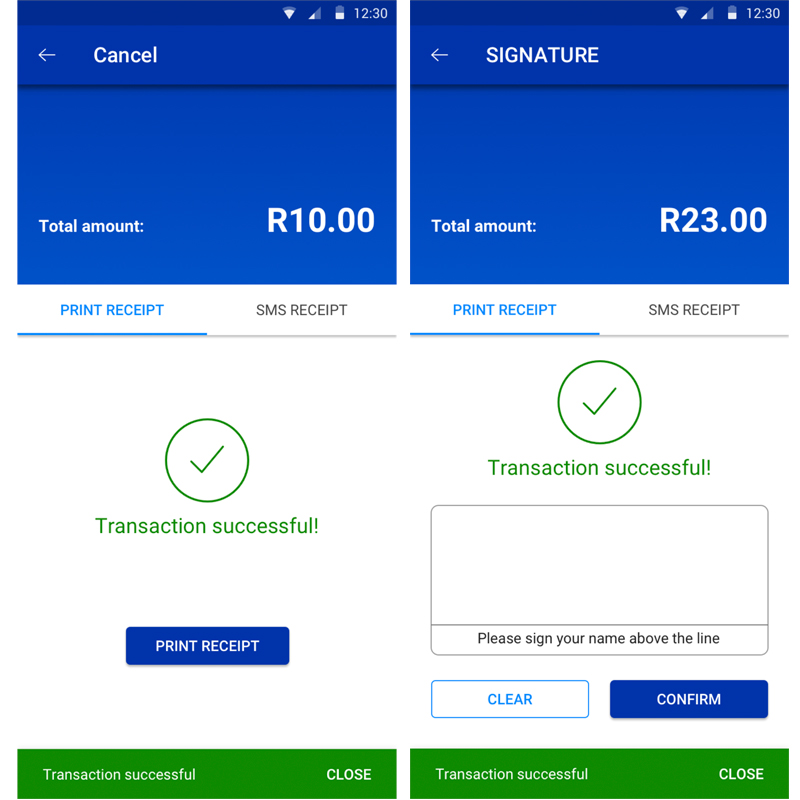
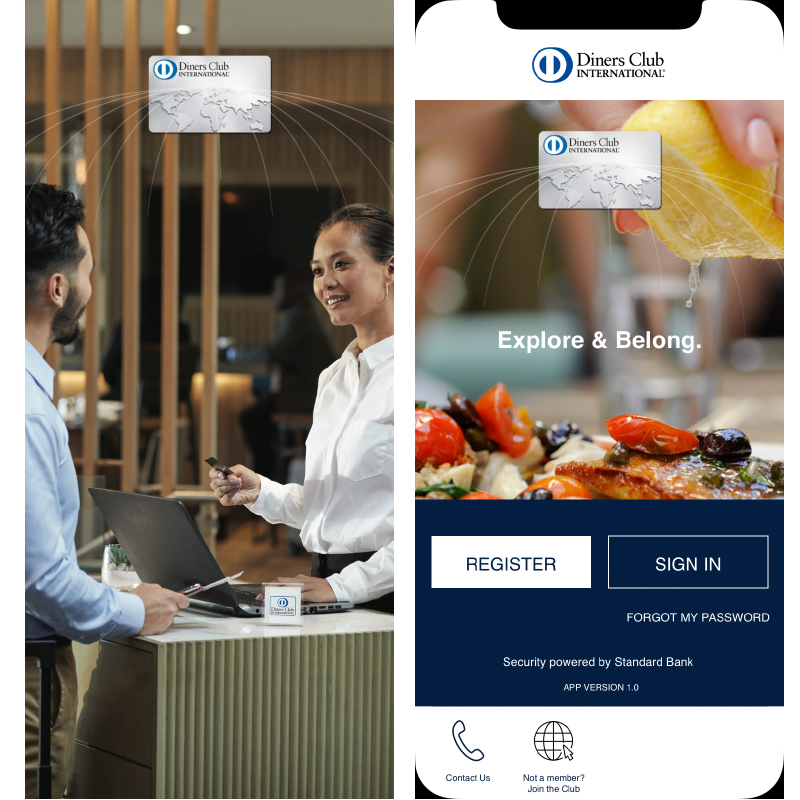
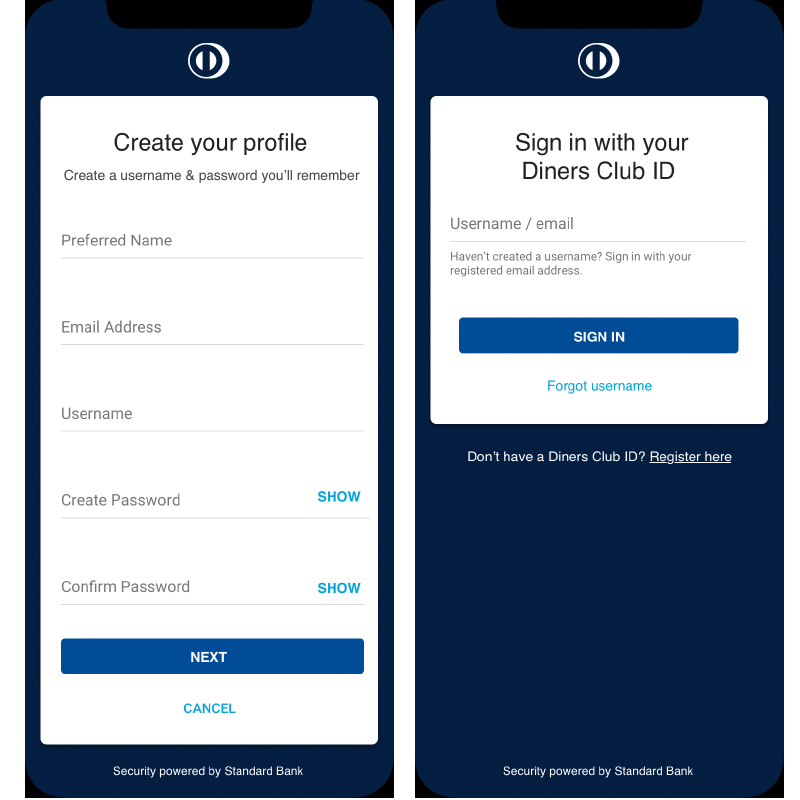
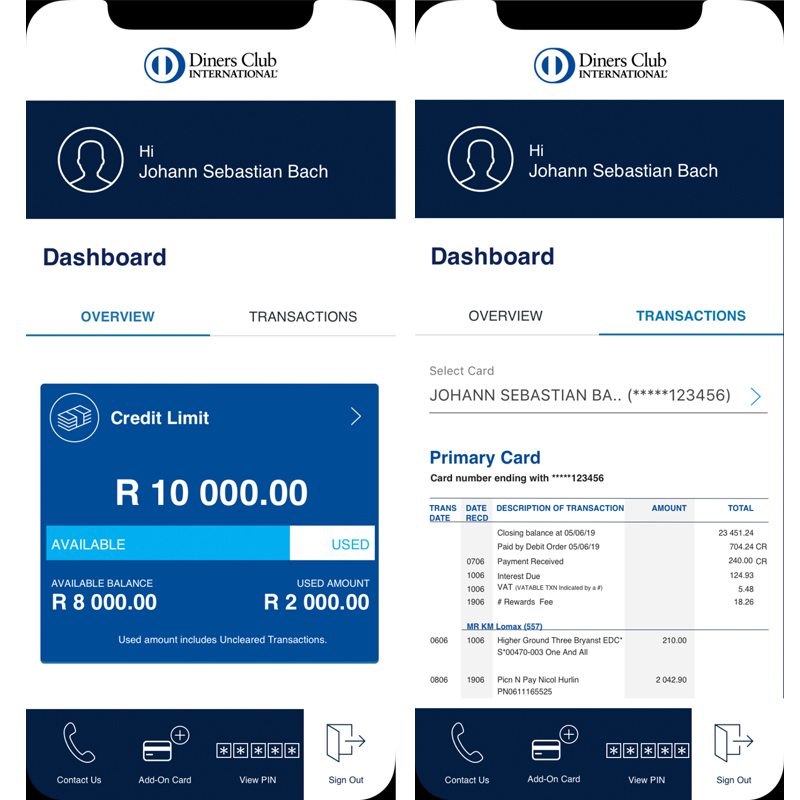
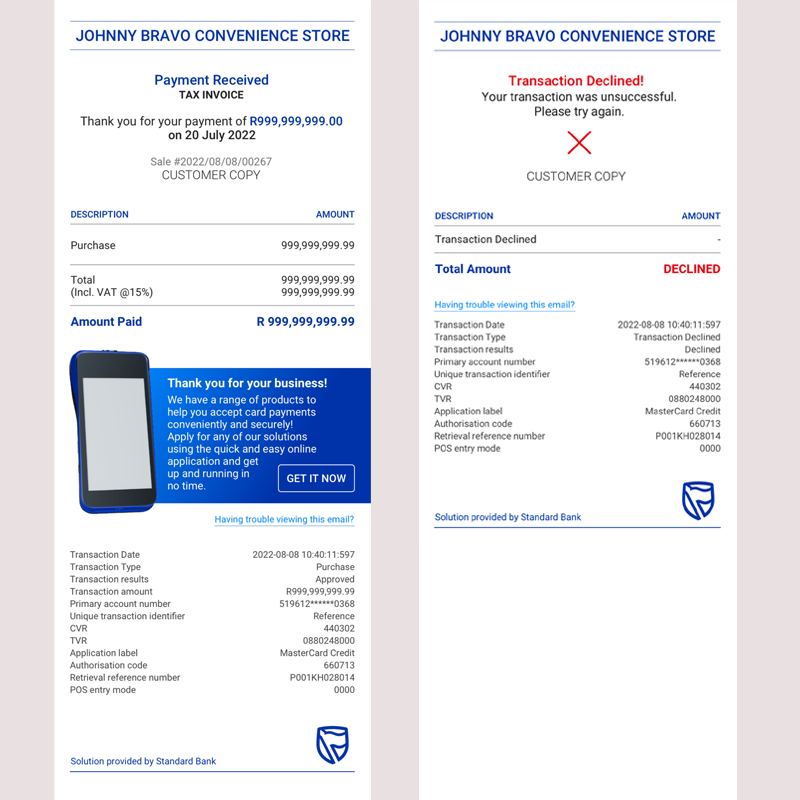
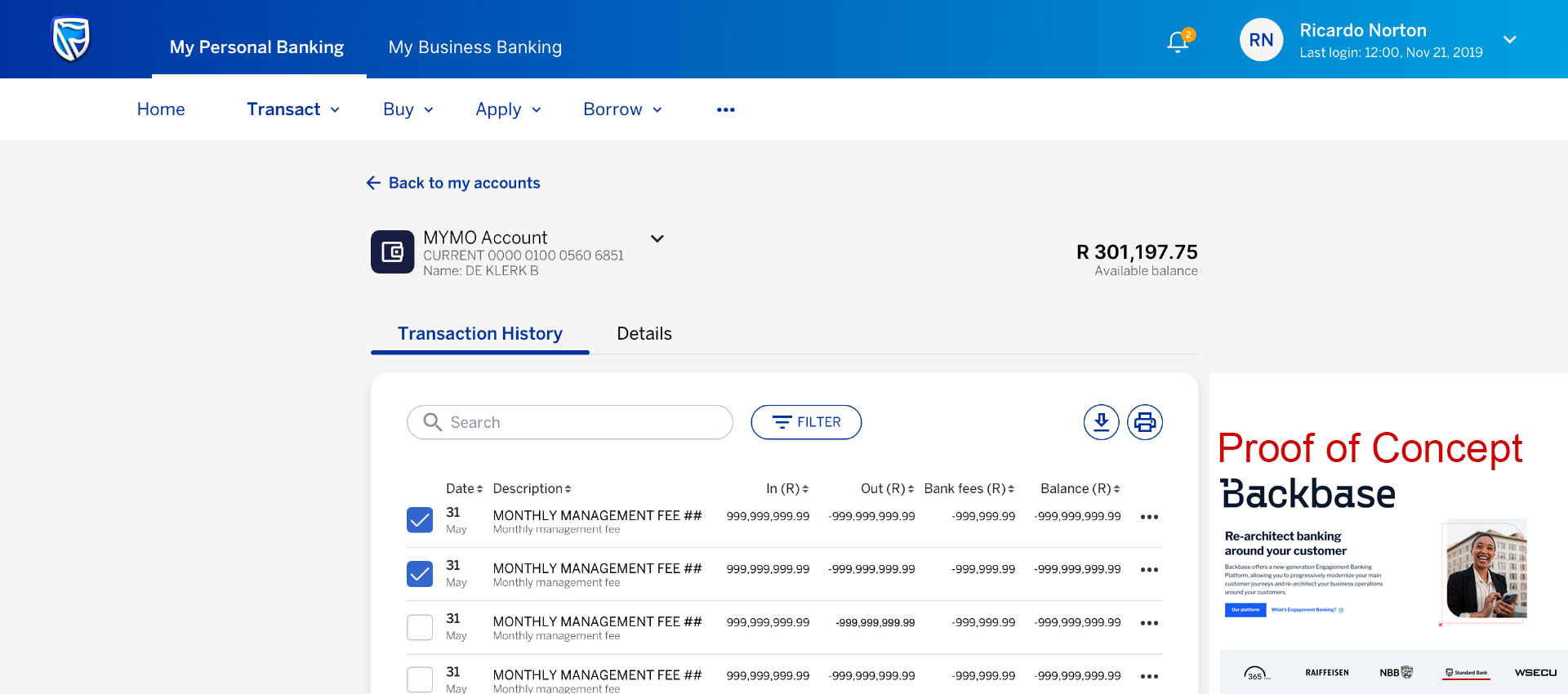
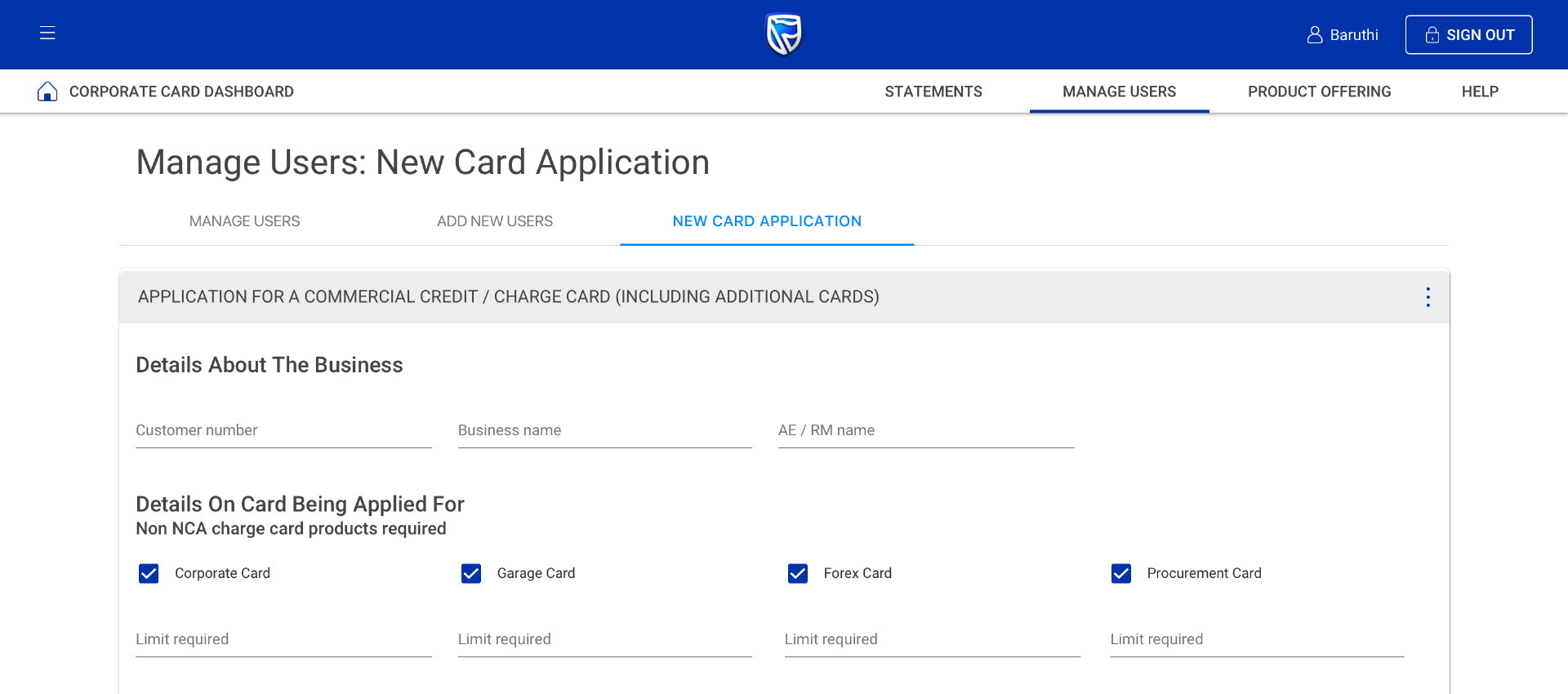
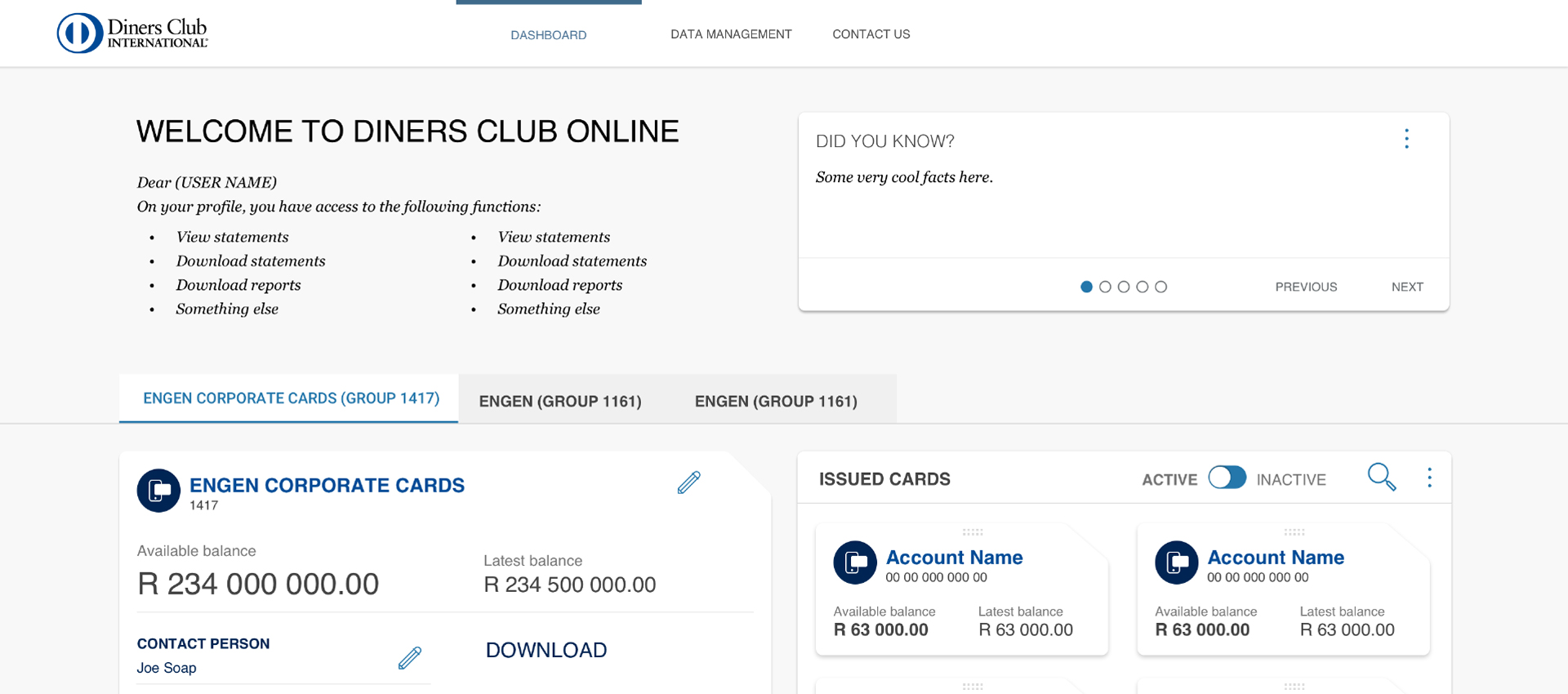
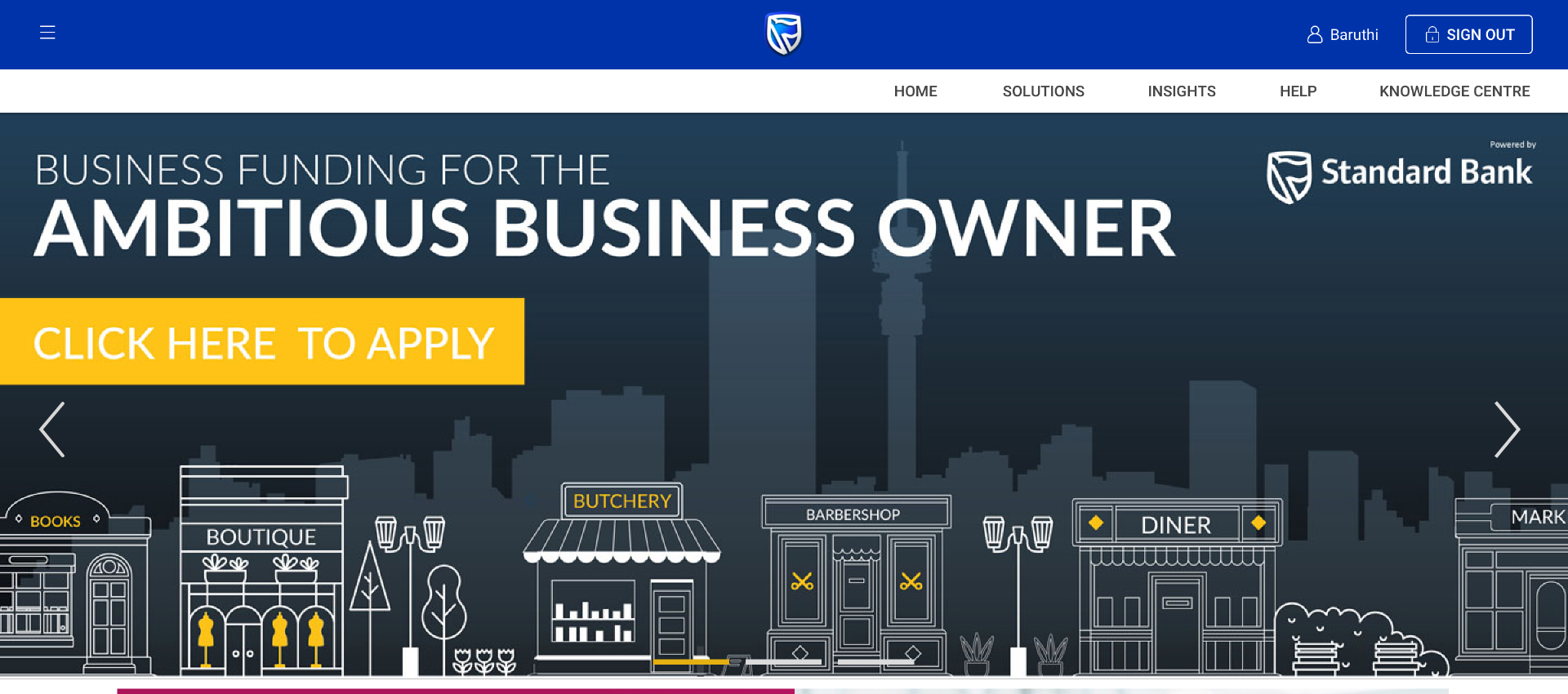
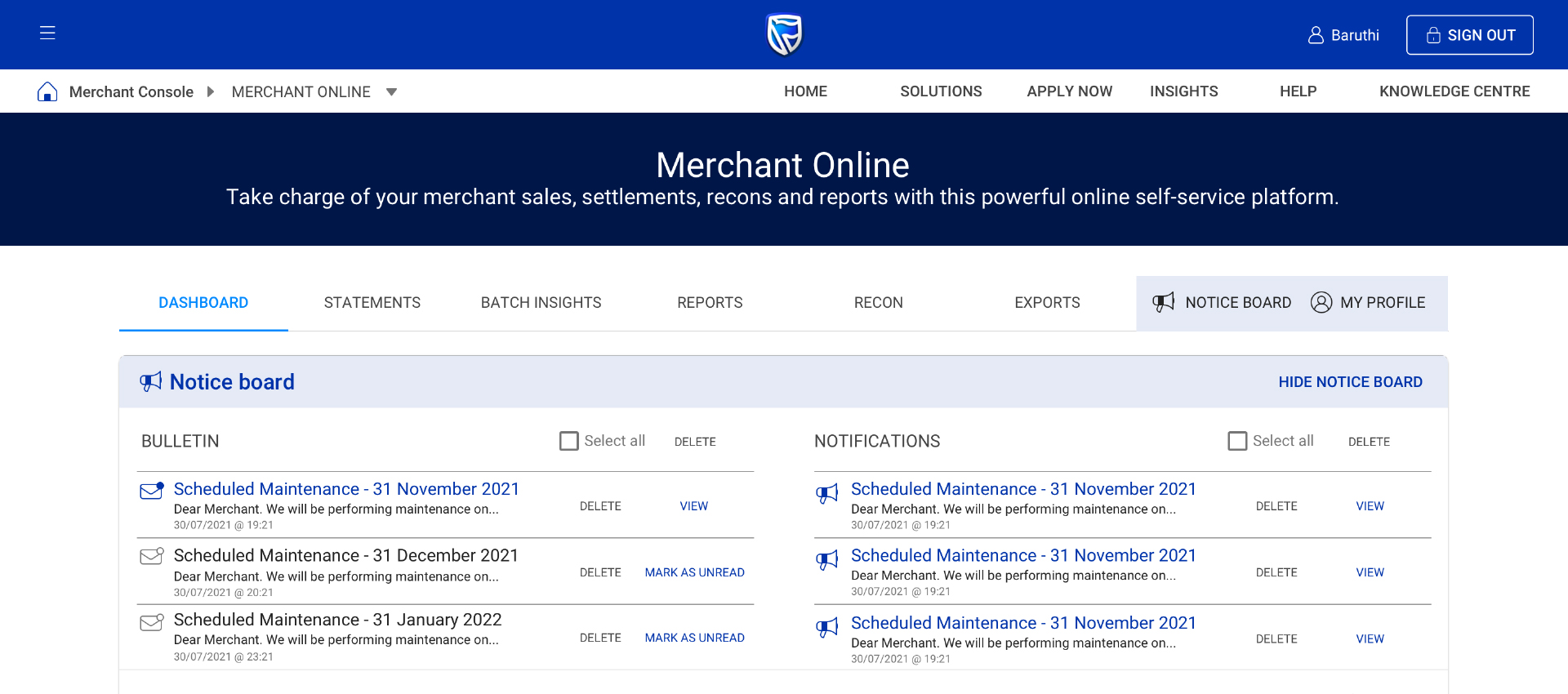
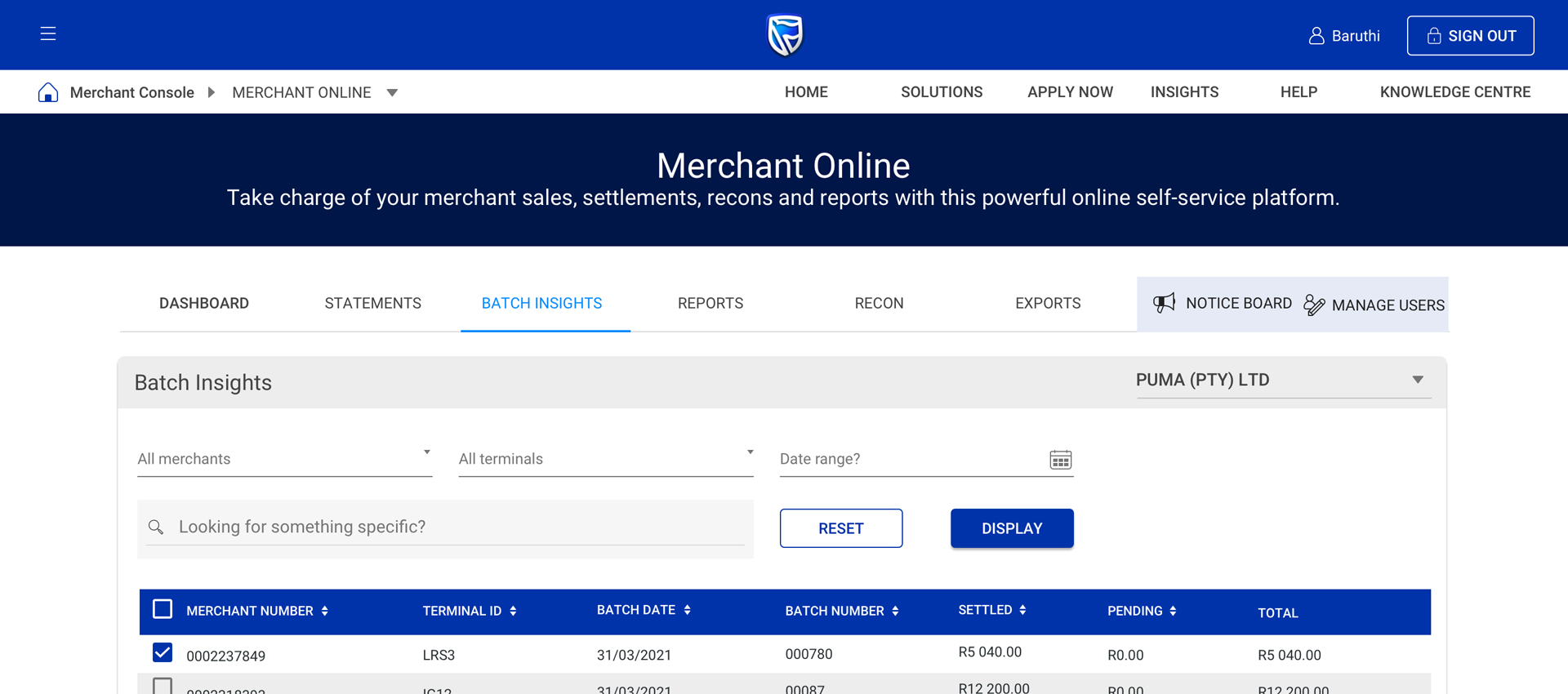
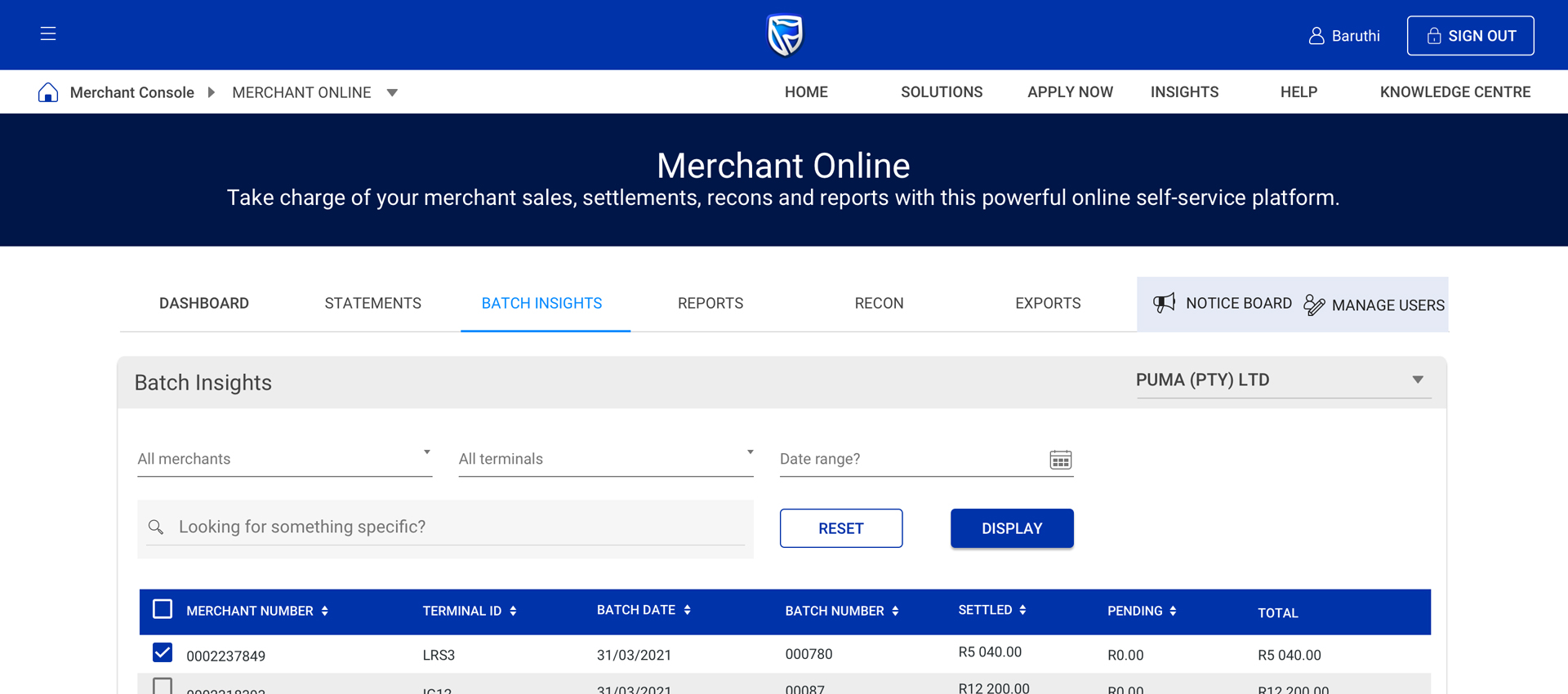
I could and did create high-fidelity UI when a project needed it, but visual design was not the centre of my practice. My core contribution was the thinking before the screen: understanding users and services, framing the problem, defining flows and concepts, and aligning the solution with business and technical constraints.
I used interface designs and prototypes to make that thinking visible, test interaction ideas and communicate direction to stakeholders, design teams and developers. Where specialist UI designers took the work forward, these artefacts became part of the handover and design intent rather than the end goal.
Retrospective lens
The Chief Technology and AI Officer Programme at NUS Computing gave me clearer language for a way of working that had already been emerging. I was most effective when orchestrating the whole problem rather than focusing on pixel-perfect screens: connecting business intent, user needs, service processes, technical constraints and delivery teams, then making that complexity understandable enough for people to act on.
That is the thread I now carry into systems architecture, technology strategy and governance. I still retain hands-on UI capability, but visual design is a supporting skill; the core value is structuring the problem, defining the solution and giving specialist design and development teams clear direction.
Where this thinking developed next
These projects increasingly moved my focus beyond individual interfaces towards systems, services, operating models and the orchestration of business, design, technology and delivery. I later developed this perspective further through the NUS Chief Technology and AI Officer Programme, culminating in a capstone focused on AI-native architecture, governance, operating models, strategic prioritisation and responsible scale.