Project name: Momentum Adviser Portal Redesign
Client: Momentum
(a DVT client)
My role: Product Design Lead
Date: 01 December 2022 – September 2025
Executive summary:
I joined the programme two years into delivery, after several major platform and architectural decisions had already been made. Working through DVT, I led product design within one of three teams responsible for notifications, tracking and lead-management capabilities on the new adviser portal. The wider transformation aimed to replace a legacy platform that cost the business R240 million a year. My role centred on understanding workflows, service dependencies and product intent, then translating that into concepts and direction that design and development teams could act on.
Picking up the pieces
When I joined, the tracking and notifications workstream had no clear mission, defined goals or usable research base. I also needed to understand how advisers and their assistants worked across the legacy portal, spreadsheets, email and other tools. I persuaded the team to arrange user interviews, while handovers from colleagues helped me build the technical and historical context needed to work within an already complex transformation.
I joined the programme two years into delivery, after several major platform and architectural decisions had already been made. Working through DVT, I led product design within one of three teams responsible for notifications, tracking and lead-management capabilities on the new adviser portal. The wider transformation aimed to replace a legacy platform that cost the business R240 million a year. My role centred on understanding workflows, service dependencies and product intent, then translating that into concepts and direction that design and development teams could act on.
The programme operated within an established technical direction: Angular, Material Design 3 and an internal design system intended to keep multiple development teams aligned. That meant much of the design challenge was not about choosing a technology stack, but about creating coherent experiences within existing architectural, organisational and delivery constraints.
I initially led product design for Activity Management. As the programme progressed, my scope expanded into UX Design Lead responsibilities across the wider platform and, shortly before go-live, the Client Advice Services workstream after a colleague left. The role increasingly became one of orchestration: aligning Product Owners, UX/CX, design and development teams around priorities, concepts, flows and constraints. I remained able to work hands-on in UI, but my focus was coherence and solution direction rather than pixel-level production.
Way of Work
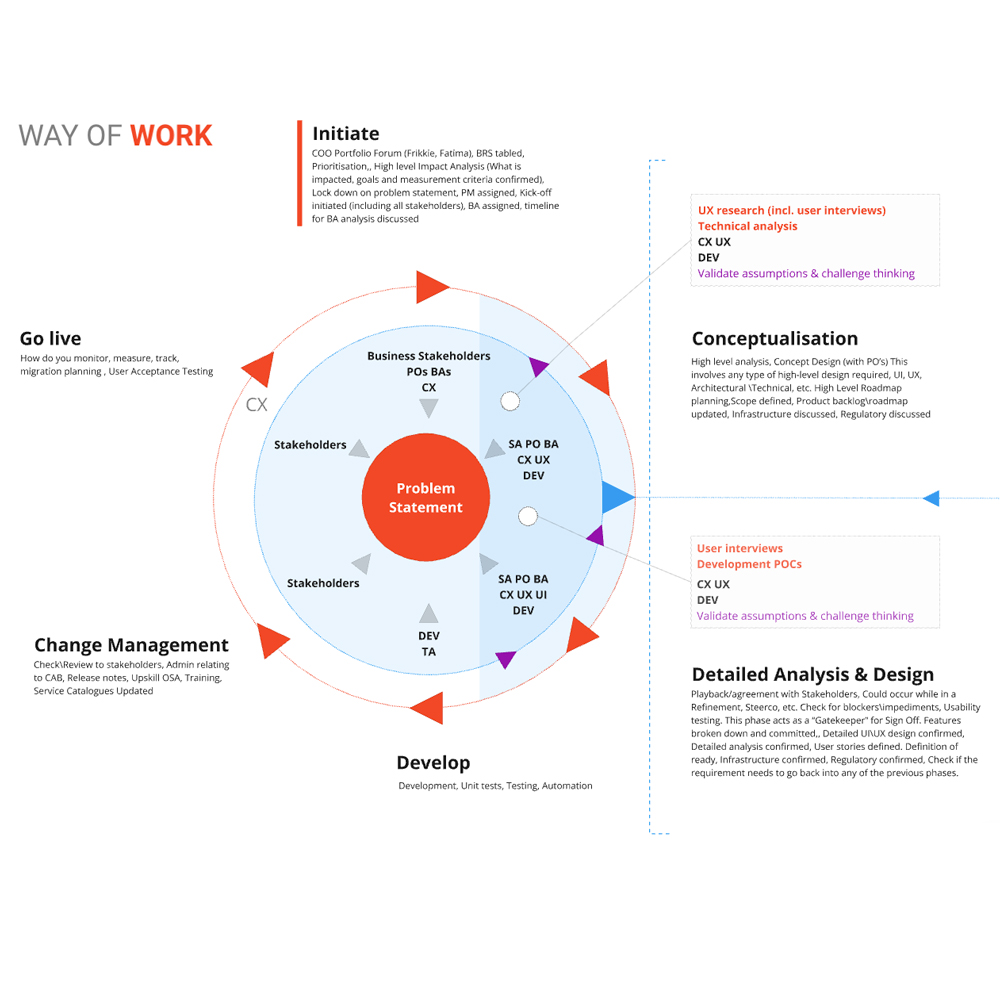
The existing Momentum Way of Work (WoW) became our first hurdle. I mapped proposed changes and improvements to the process and presented them to the Scrum of Scrums for approval. Once the stakeholders agreed, the research team provided a pre-selected list of users for interviews.
Research “From discovery to definition”
During discovery, we gathered evidence to understand the existing workflows, constraints and user needs. We then moved into definition, where the research helped us frame the problem, clarify objectives and distinguish real requirements from inherited assumptions. This gave the teams a stronger basis for prioritising solutions and aligning delivery around evidence.
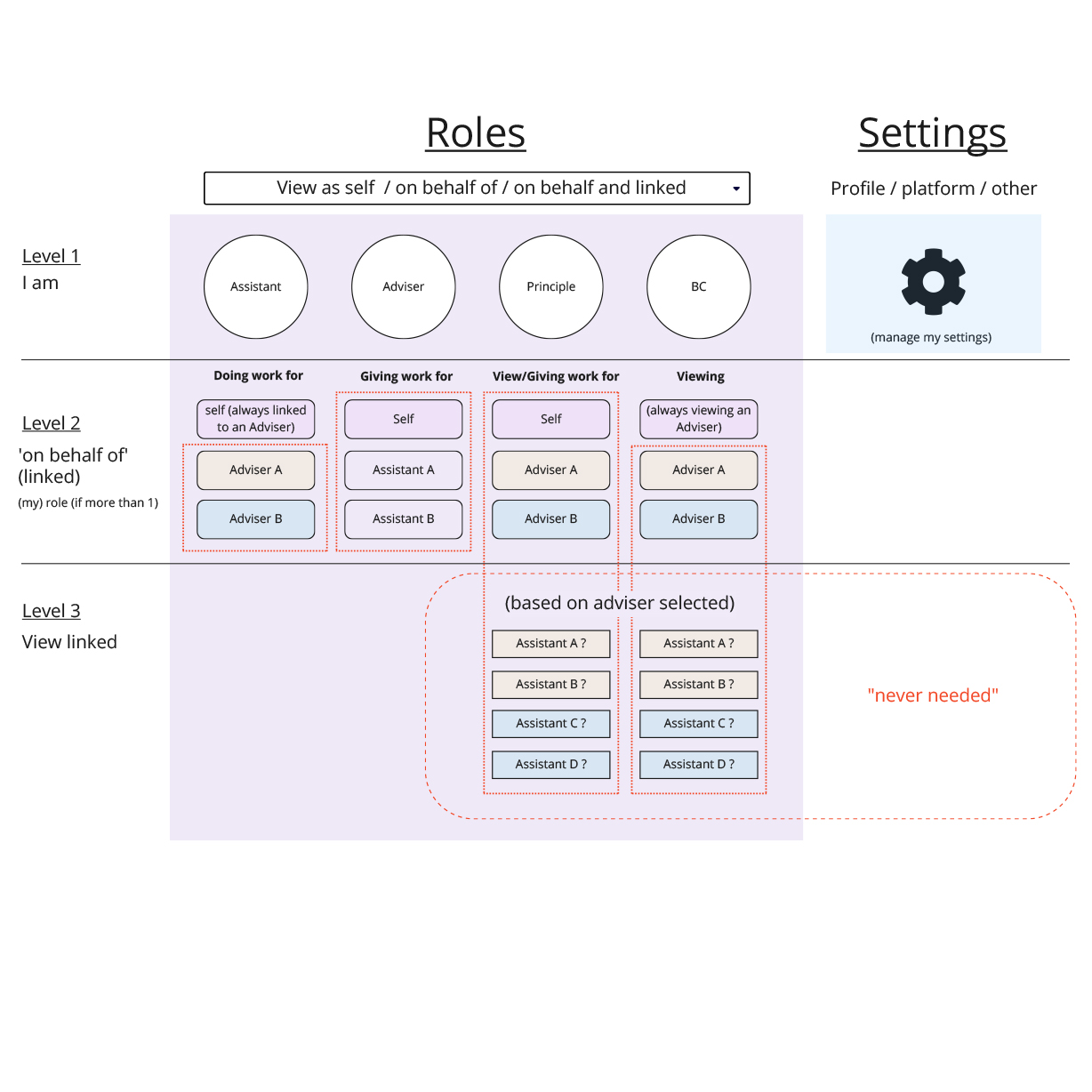
Heuristics
I analysed the existing experience to identify usability issues and opportunities.
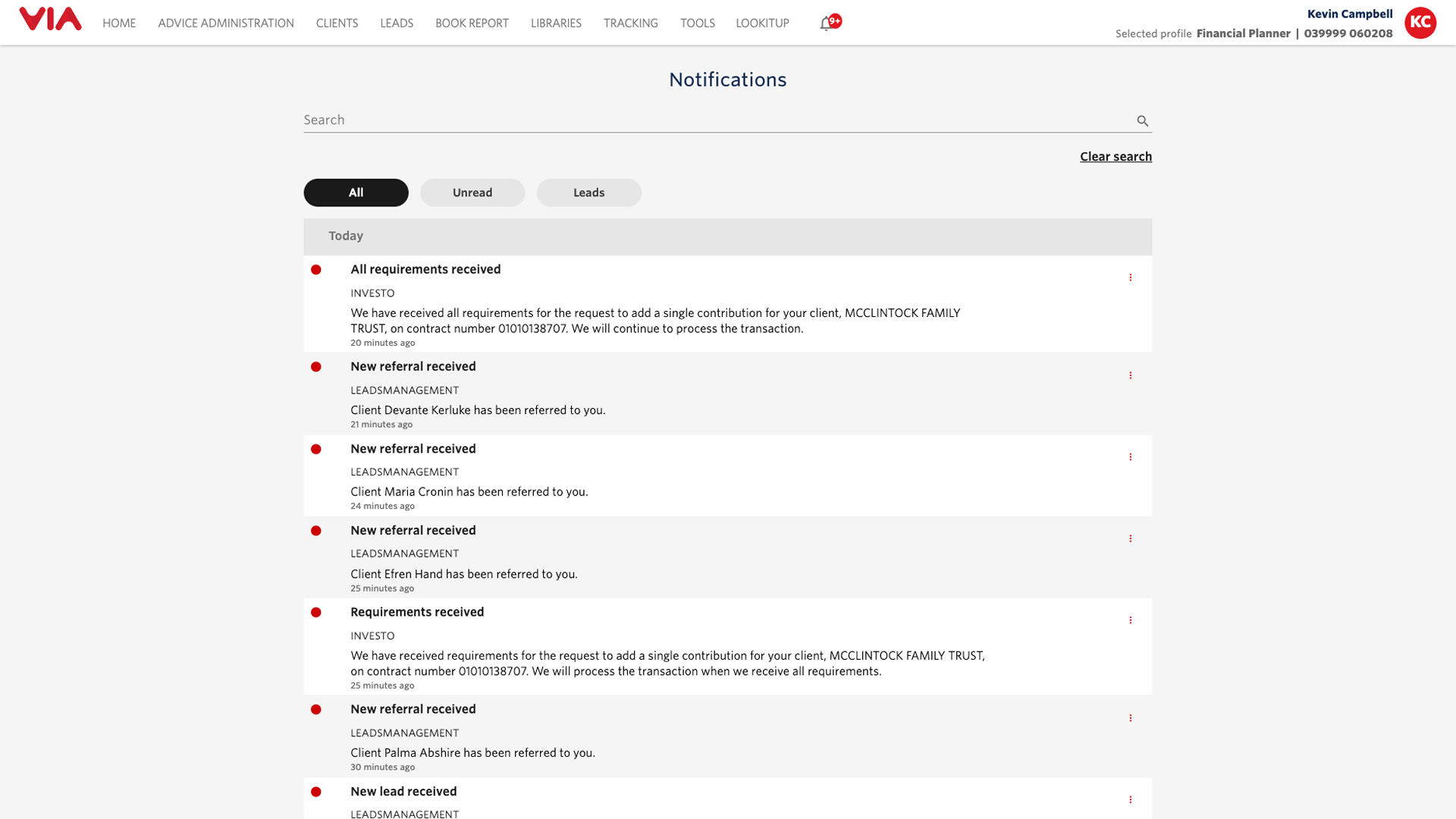
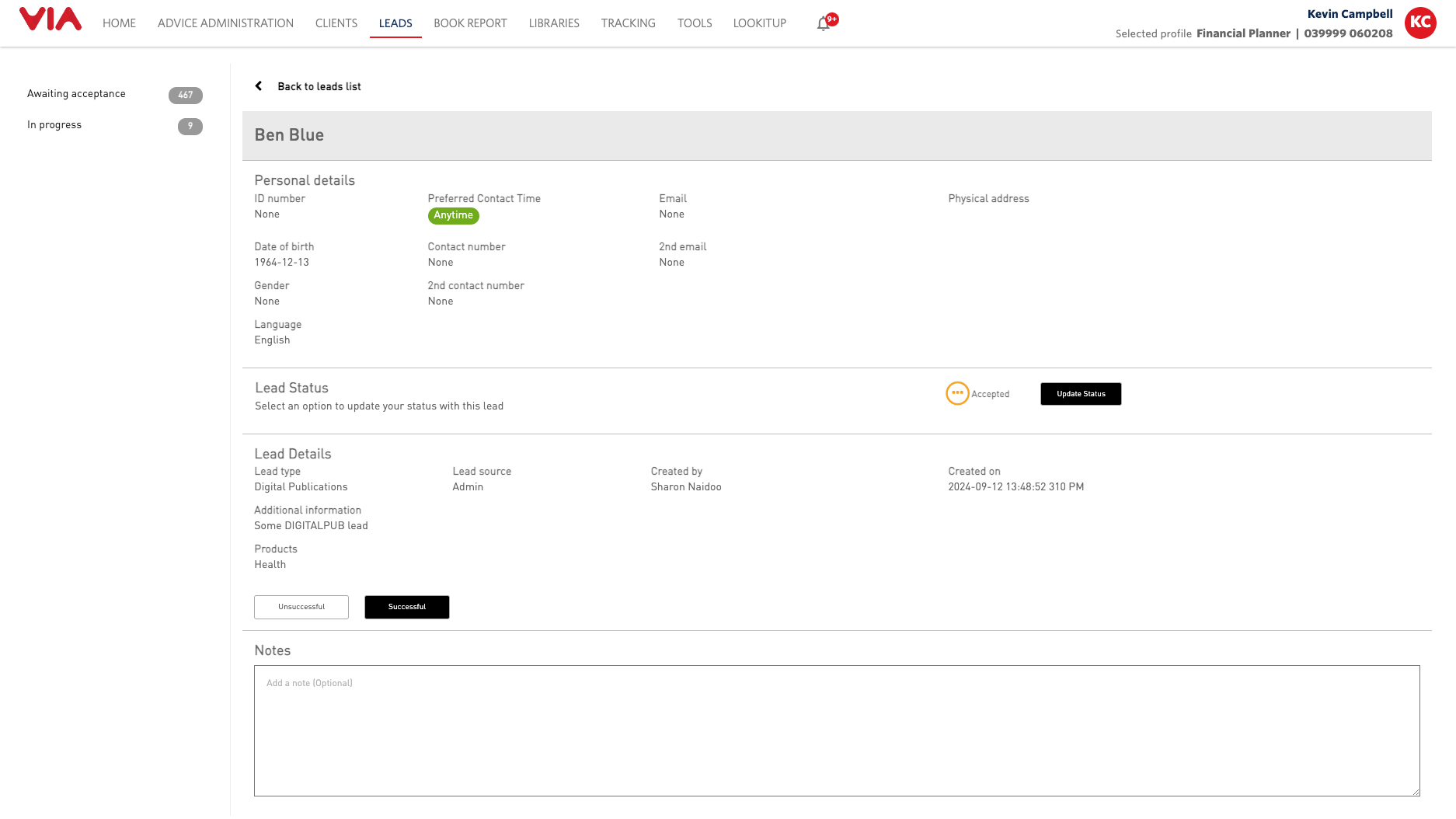
Service Design Blueprint
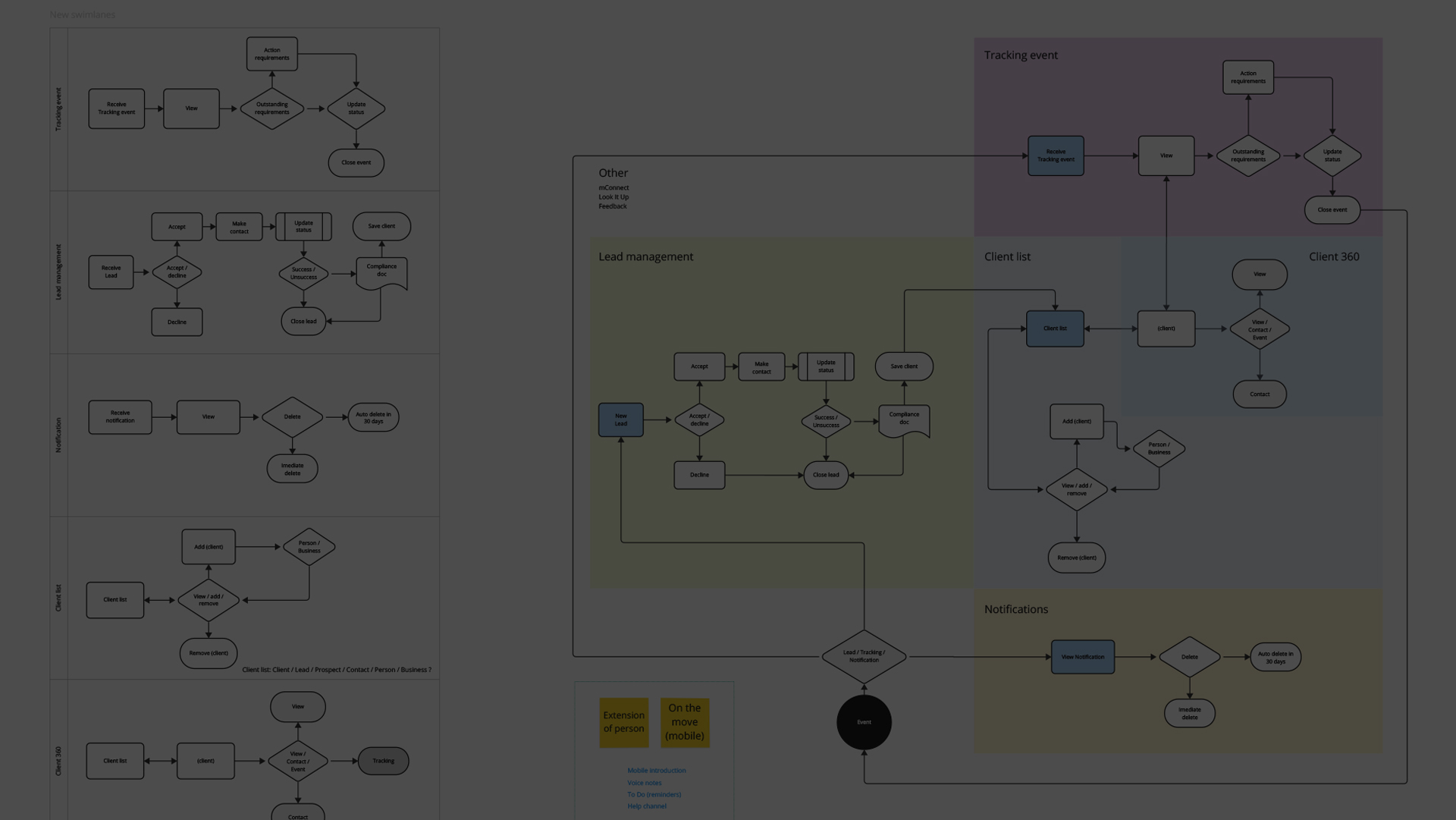
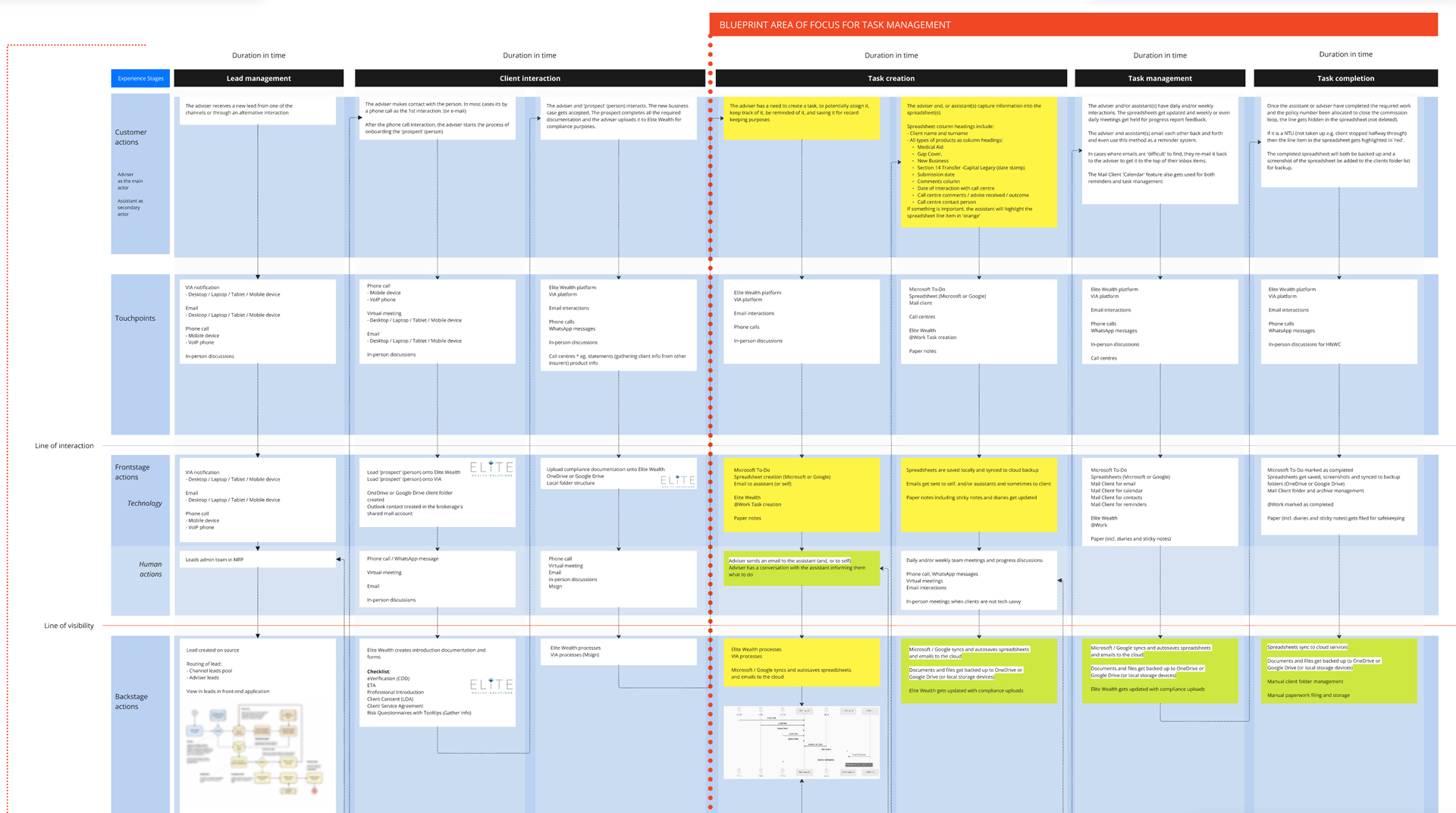
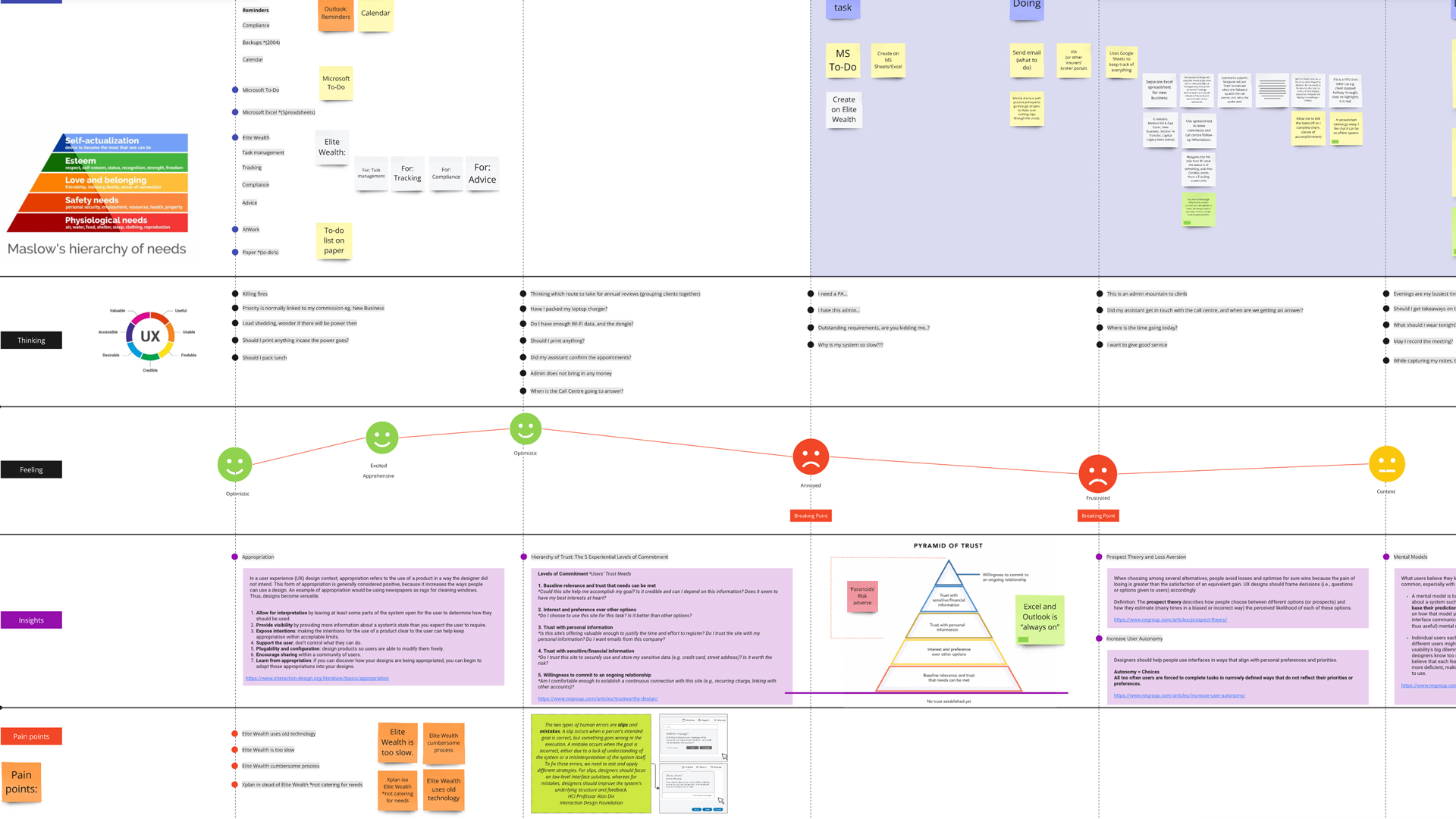
Sharing previous learning and building capability within the team formed part of my approach. I introduced a CX colleague to Service Design Blueprints. We first mapped the adviser and assistant journey, then expanded it into a blueprint showing their workflows, the Momentum systems and software they depended on, supporting backend services and the staff interactions behind the visible experience.
That work made the wider service system visible and quickly exposed pain points, dependencies and opportunities, which we presented to Product Owners and business stakeholders.
What did I need to learn or discover?
Our Service Design Blueprint work revealed that all seven financial adviser brokerages we interviewed relied on spreadsheets to track new leads, monitor open cases and manage client-advice reminders. Advisers were highly protective of this information because it represented client relationships, income and personal intellectual property. Multiple backups and cloud storage, particularly OneDrive, had become part of their own informal risk controls.
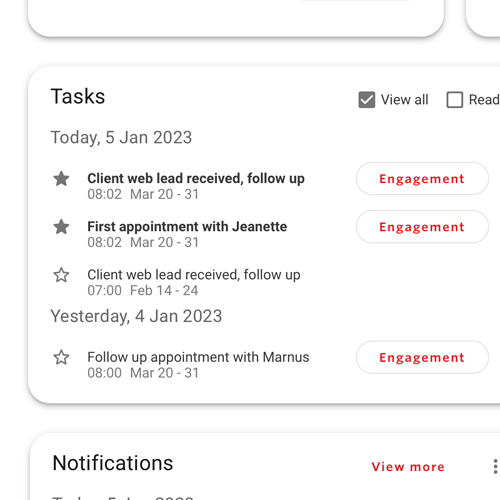
We also observed advisers repurposing tools such as Outlook email as informal task-management systems. That behaviour showed that the underlying need was not another notification feature, but a reliable way to manage work across cases and follow-ups. It led us to prioritise task management and reminders on the roadmap.
Carina, the “Spreadsheet Surfer”
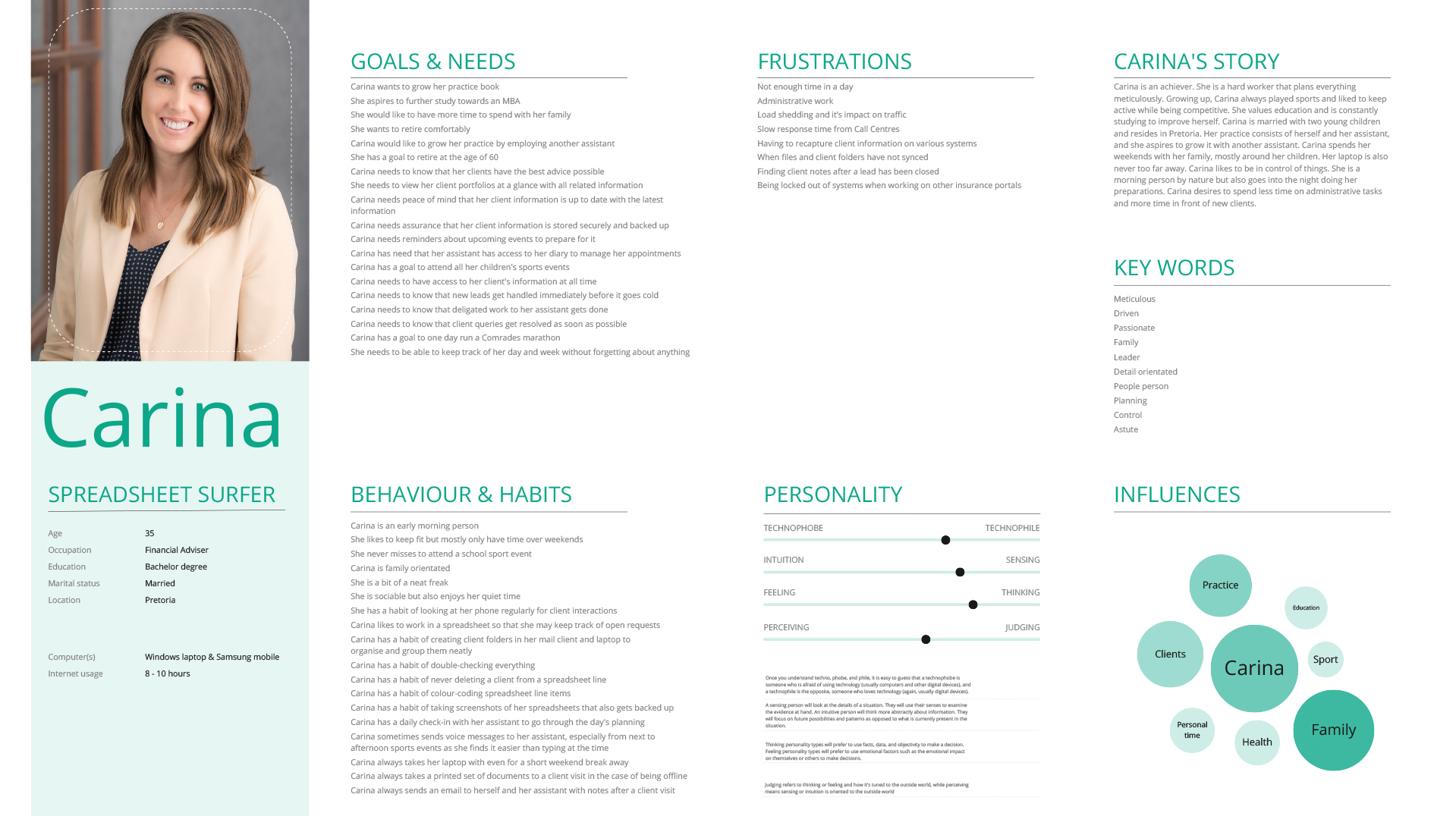
The initial interviews also showed that the team’s proto-personas no longer reflected how advisers and assistants actually worked. I created a new persona, “Carina, the Spreadsheet Surfer”, grounded in the observed behaviour. Her workflow centred on copying, pasting and rewriting information across spreadsheets and systems, which created duplication, increased error risk and consumed time. The persona helped the team keep those operational realities visible during design decisions.
Initial wireframe concepts
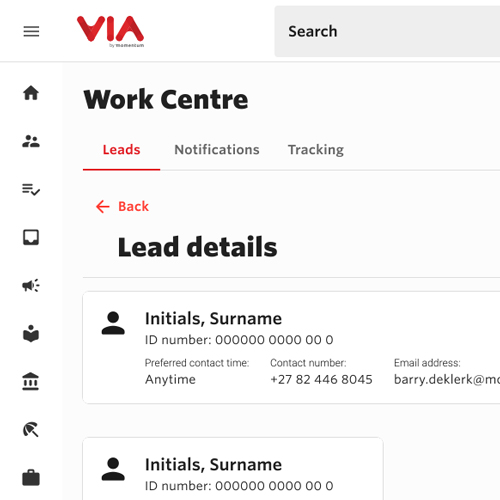
Low-resolution wireframes used to communicate the concept, flow and interaction intent.
Initial wireframe concepts
Low-resolution wireframes used to communicate the concept, flow and interaction intent.
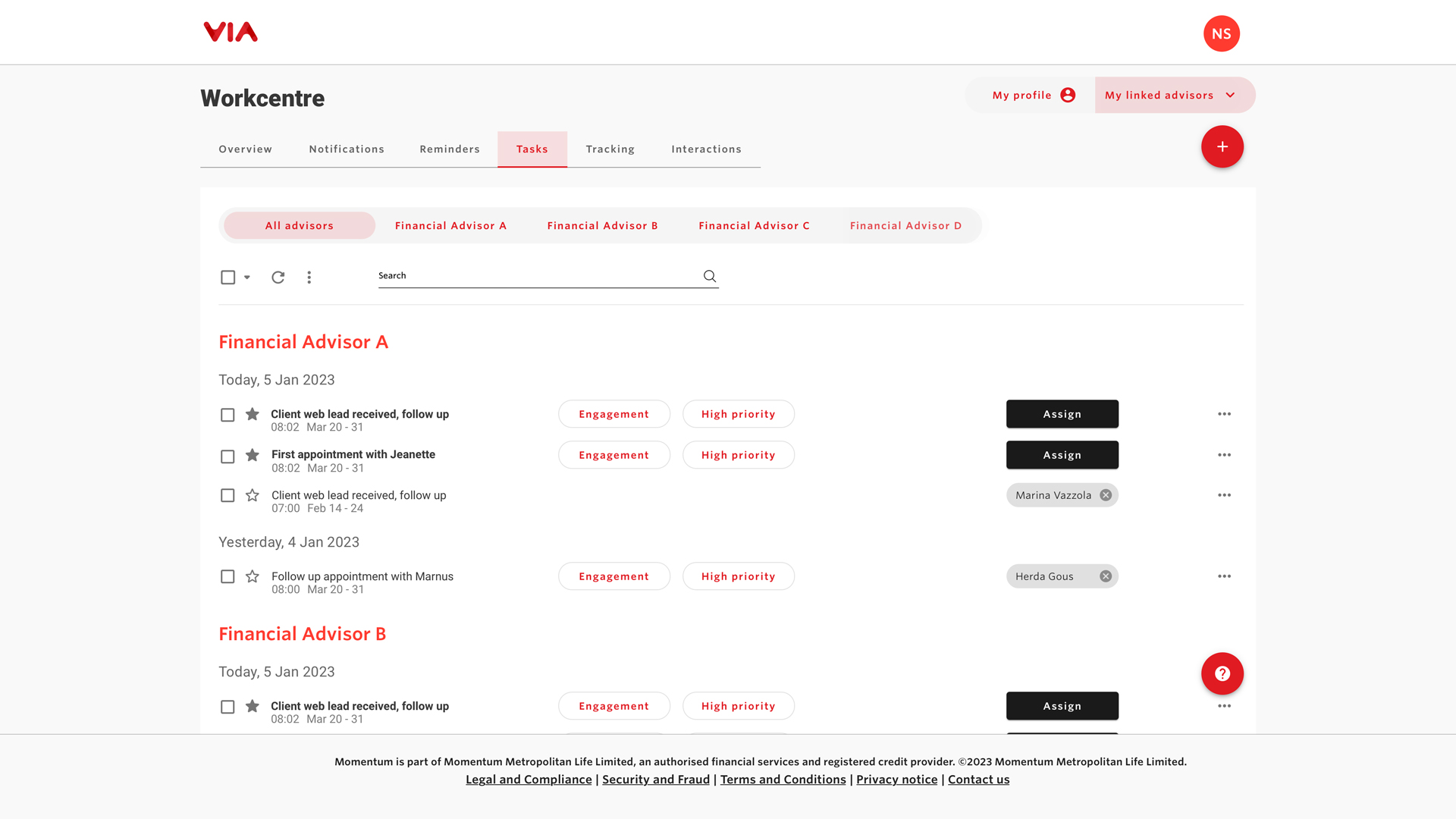
Initial user feedback
Early user feedback translated the research into several practical opportunities. We explored MS365 integration to automate backups and reduce manual recapture, ways to import existing spreadsheets while preserving data integrity, and a task-management concept with reminders and task assignment. The aim was to reduce dependence on personal workarounds without removing the behaviours advisers already trusted.
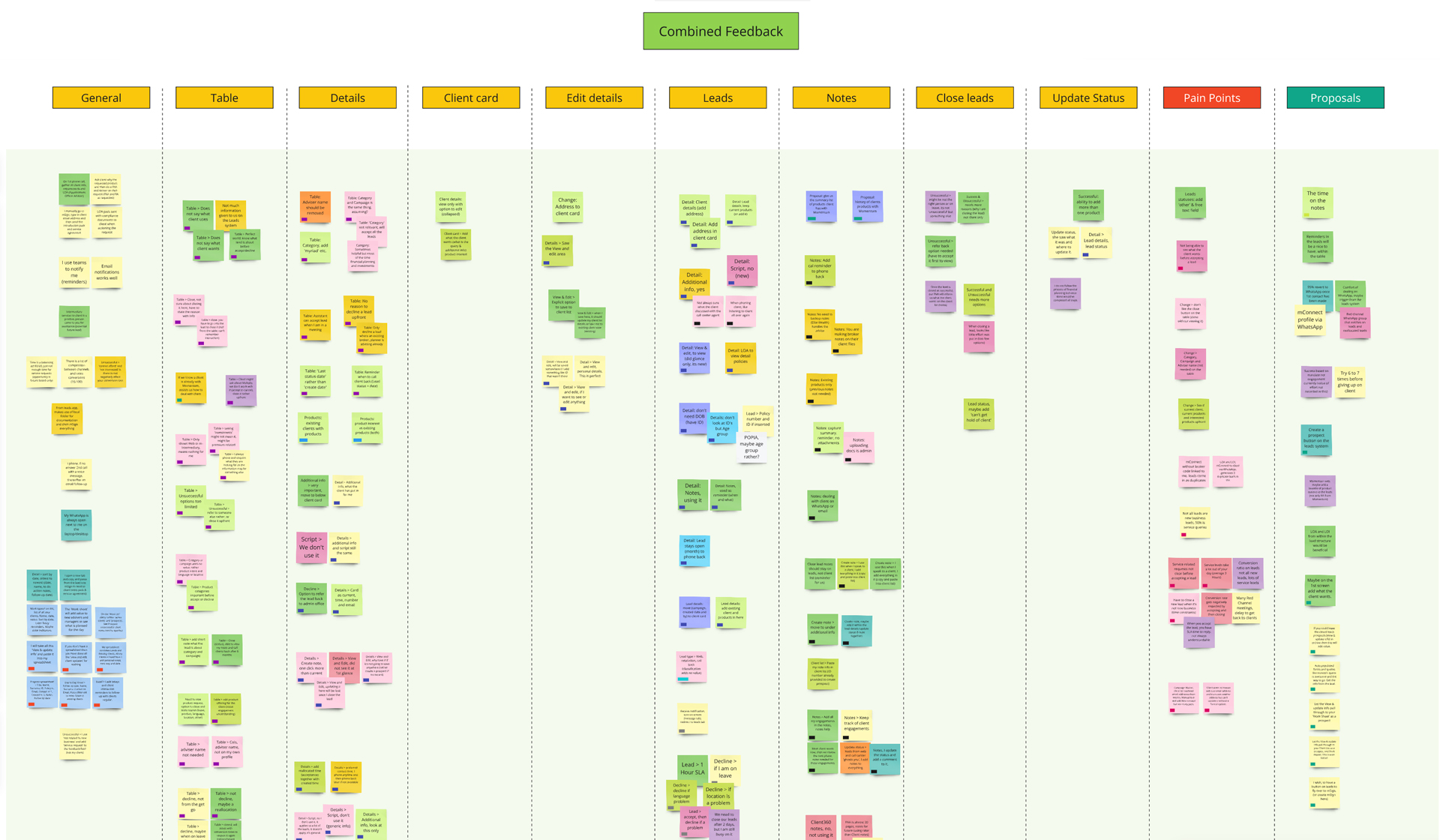
Updated design
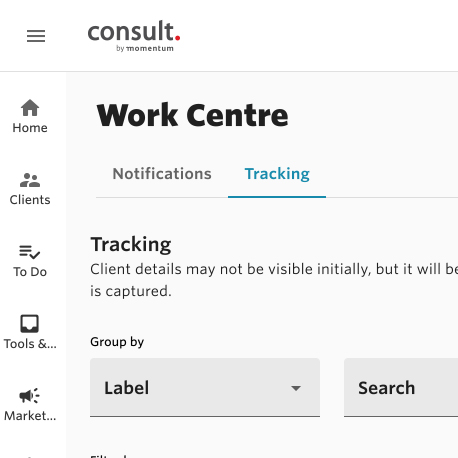
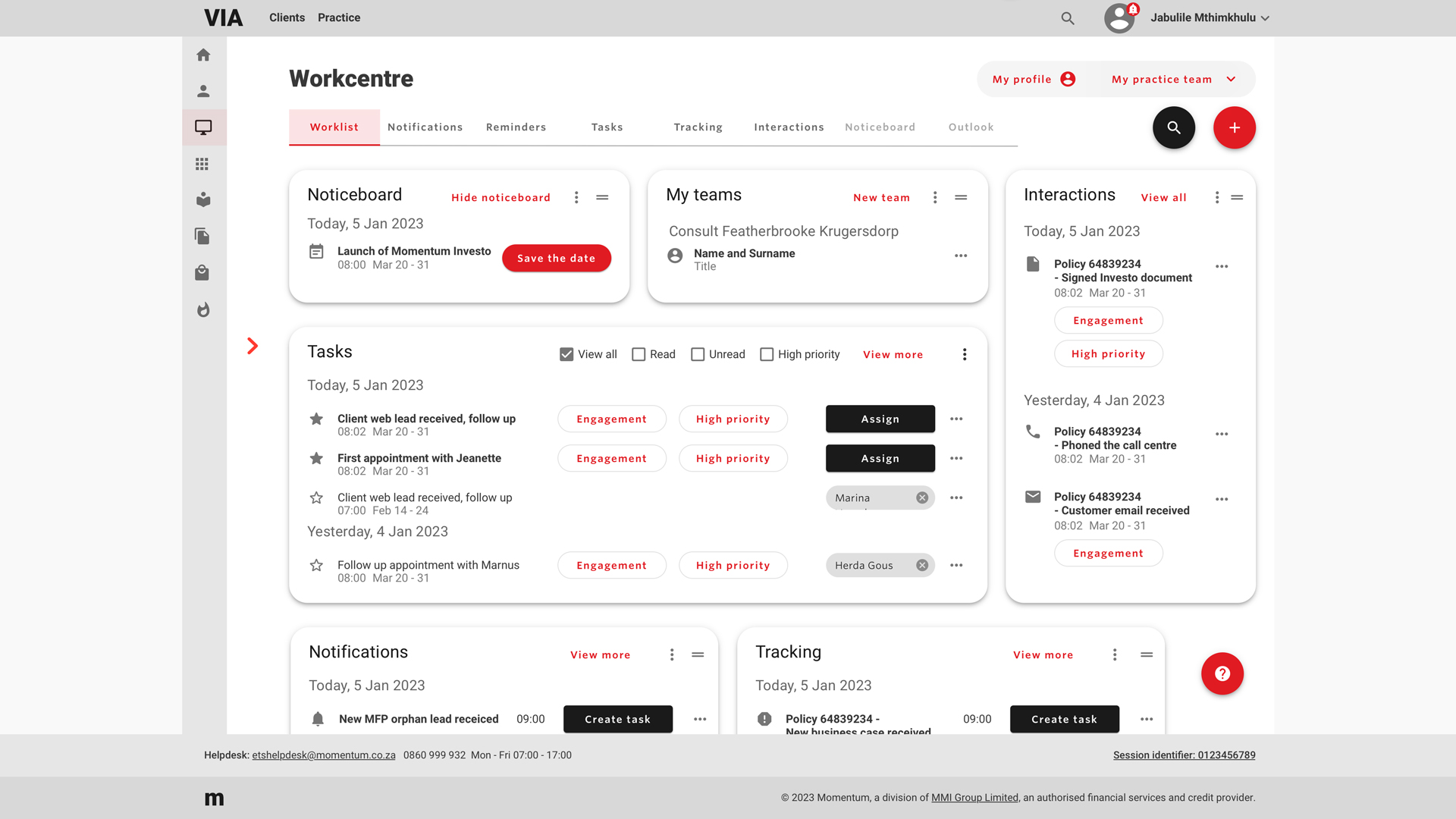
Medium-resolution Figma wireframes used to clarify the solution, support validation and provide direction for handover.
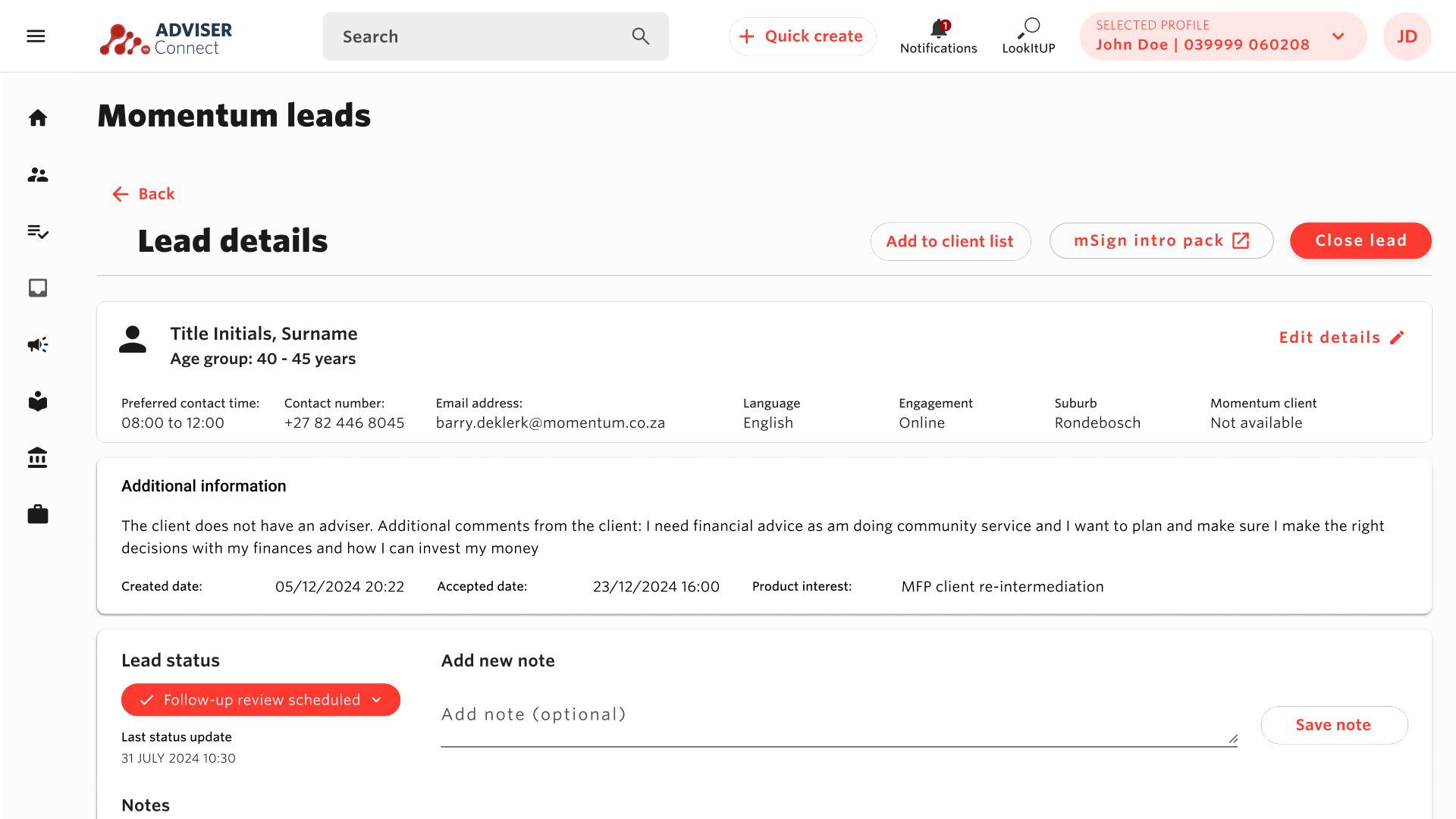
Another hurdle: the mobile app
About a year before go-live, my scope expanded again when I was moved onto the adviser mobile app as Lead Product Designer. The existing Flutter app had an ageing codebase and presented a security risk, while the replacement needed to align with the new web platform. The immediate brief was to establish a viable navigation shell quickly enough for development to proceed.
The replacement app had to launch alongside the web portal in March 2025. We therefore compressed discovery and design into a tighter cycle while maintaining cross-channel consistency and working within security, feature and delivery constraints.
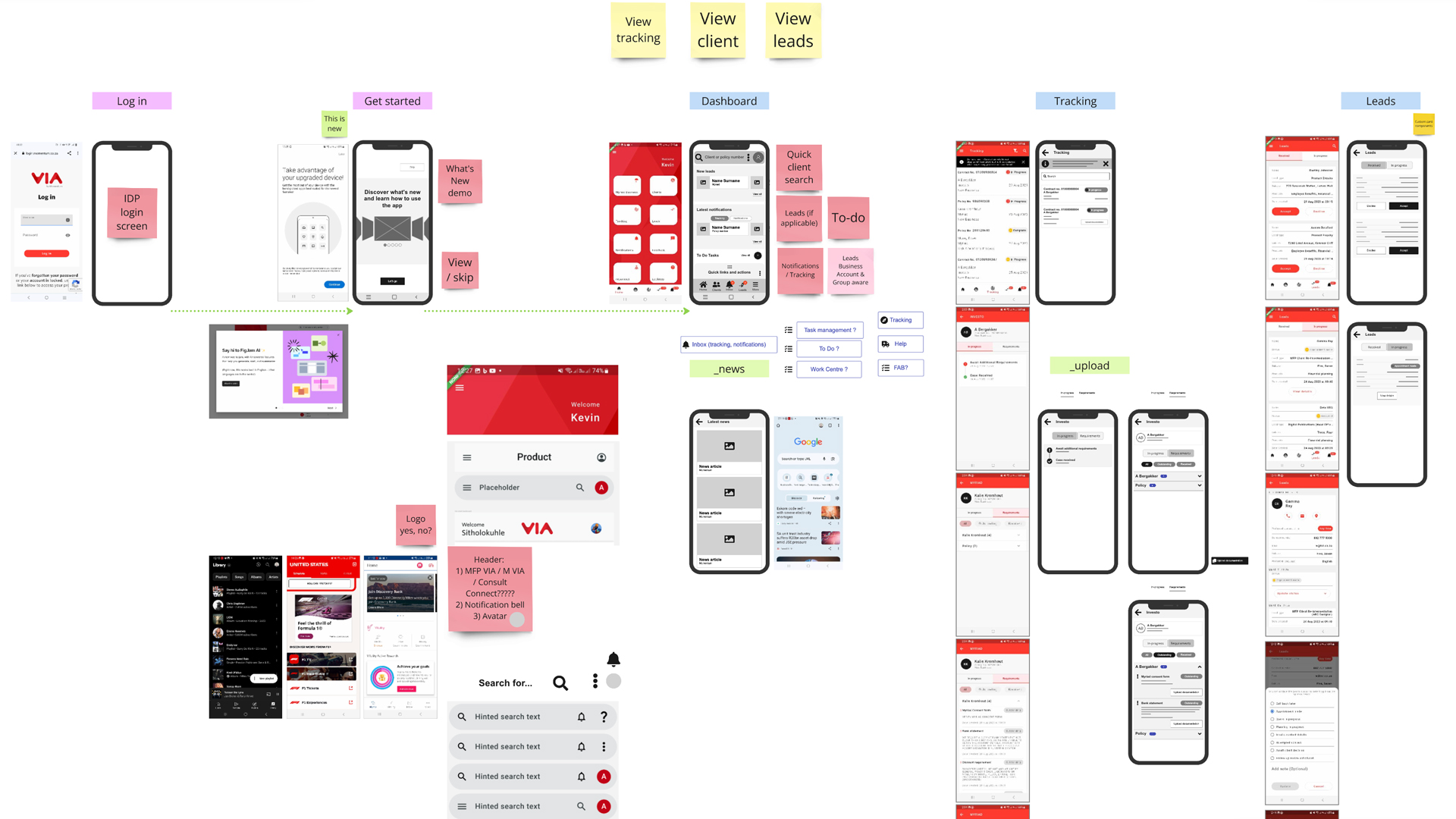
Retrospective lens
After completing the Chief Technology and AI Officer (CTAIO) Programme at NUS Computing, I could describe this work more clearly as enterprise product and service orchestration. The challenge was not simply to design a portal; it was to connect user workflows, legacy technology, data ownership, operational processes, business priorities and multiple delivery teams into a coherent direction.
The screens, wireframes and service artefacts were valuable because they made that thinking visible and actionable. I could create UI when needed, but the core contribution was defining the problem, shaping the concept, aligning the system around it and giving specialist design and development teams enough clarity to execute. That progression became a natural bridge into systems architecture, technology strategy and governance.
Where this thinking developed next
These projects increasingly moved my focus beyond individual interfaces towards systems, services, operating models and the orchestration of business, design, technology and delivery. I later developed this perspective further through the NUS Chief Technology and AI Officer Programme, culminating in a capstone focused on AI-native architecture, governance, operating models, strategic prioritisation and responsible scale.